On this page
Start with the question that actually matters before you shop: where will this crate spend most of its life — bolted in a cargo area or parked next to your desk? That single answer decides almost everything else, from wall material to latch hardware to price.
In my practice I’ve had more than one owner bring in a dog with a scraped muzzle and a bent nail after a hard stop in traffic sent a wire crate sliding into the back of a seat. One case that stuck with me was a 55-pound mixed-breed, about four years old, riding loose in a folding wire crate zip-tied to a cargo hook. The owner had used that same crate at home for two years without issue — it held up fine for naps and overnight sleep. It was never built to absorb deceleration force, and the first hard brake on a wet exit ramp proved that. The dog was sore for about a week, favoring the left front leg, and the owner replaced the crate before the next trip. Nothing about that crate was defective for its original job. It was just the wrong crate for the road.
What a home crate is actually built to do
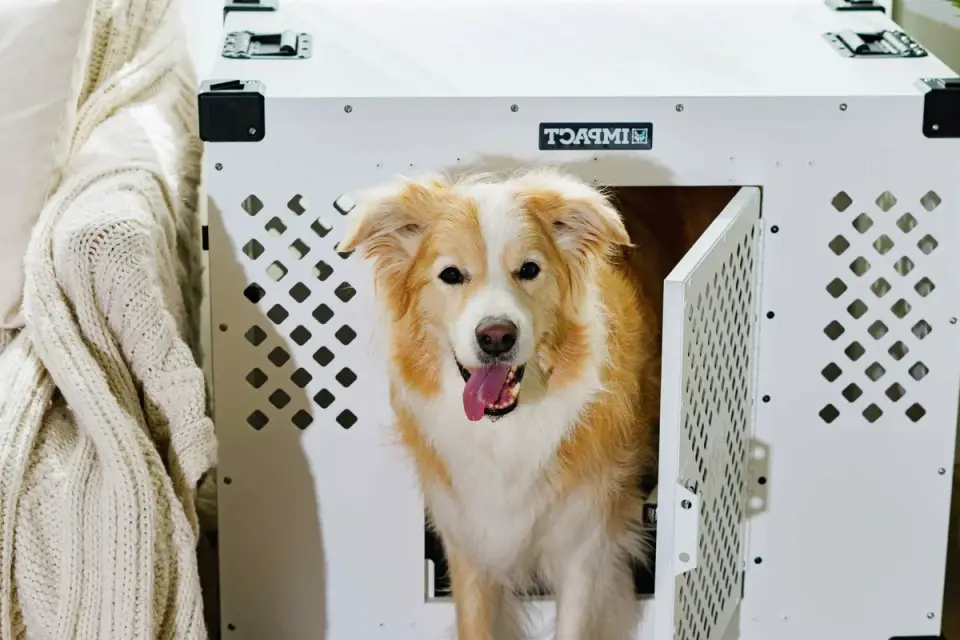
A home crate is a den substitute. Its job is to feel small, safe, and boring in a good way — the kind of space a dog chooses to nap in once housetraining and crate training have gone well. Wire crates, soft-sided mesh pens, and furniture-style crates dominate this category because airflow, visibility, and ease of folding matter more than structural rigidity. None of that construction is designed to resist deceleration forces, and it isn’t meant to be.
Veterinary and training resources have long treated the home crate as a behavioral tool first. Texas A&M’s veterinary school notes that crate training is one of the fastest, least stressful ways to shape a puppy’s routine and reduce anxiety during stressful events like storms or fireworks, provided the crate is introduced as a positive space rather than a punishment (see Texas A&M College of Veterinary Medicine: The Benefits of Crate Training). That framing matters for shopping decisions too: a home crate should be sized so the dog can stand, turn around, and lie flat, with just enough extra room to feel comfortable — not cavernous, not cramped.
Where the two categories start pulling apart
A travel crate has a second job the home crate never has to do: survive motion. That splits into two very different scenarios, and it’s worth treating them separately.
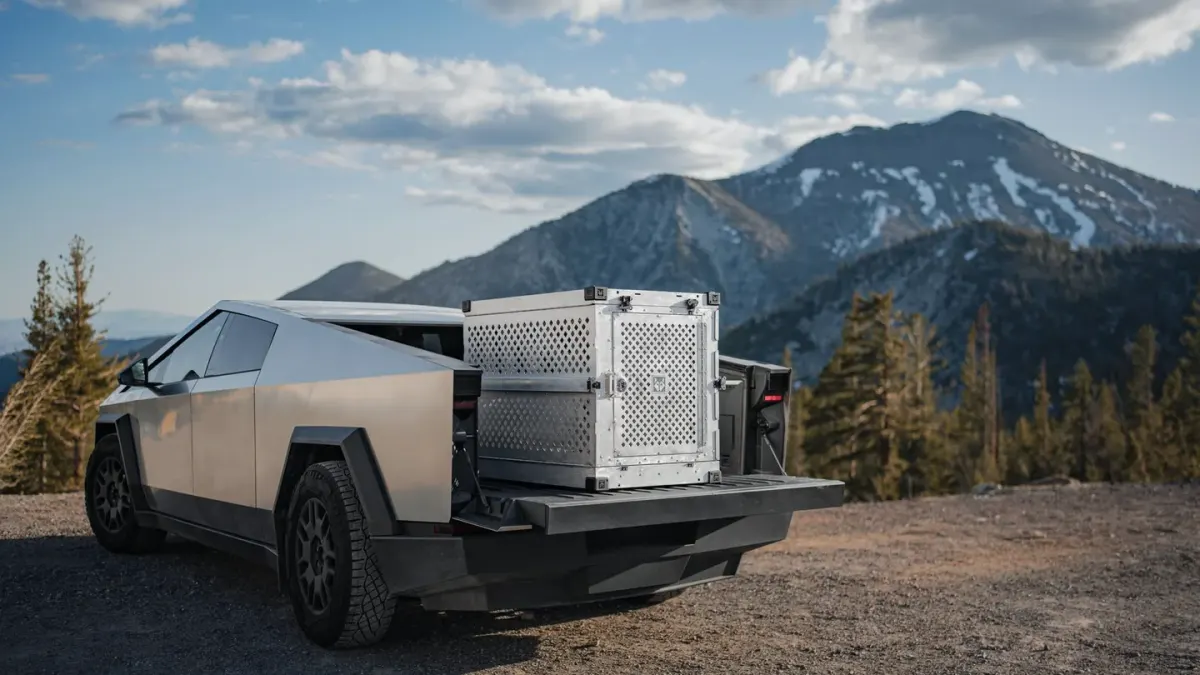
Car travel puts the crate through braking, cornering, and — worst case — a collision. The Center for Pet Safety runs independent crash tests at roughly 30 mph using instrumented dog dummies, based on a European seat-anchorage standard, and it does not accept funding from crate manufacturers. Only a handful of hard-sided crates from a small number of makers have earned its 5-star rating for keeping a dummy contained through that test (see Pet Carrier & Crate Crash Test Research). A wire or soft crate that’s perfectly fine bolted in a mudroom is not built for that kind of force, and most were never tested for it at all.
Air travel runs on a different rulebook entirely. Airlines follow guidance built around IATA’s Live Animals Regulations, which specify ventilation on multiple sides, sturdy single-door latching (metal hardware, not plastic snaps), and internal dimensions calculated from the dog’s length, width, and standing height, with a few inches of clearance over the head (see Guidance for Passengers Traveling with their Dog or Cat in the Cabin). Airlines still make the final call on what they’ll accept, so check with the carrier directly before you buy.
Matching the crate to the trip you actually take
If your dog rides in the car occasionally — vet visits, weekend trips — a crash-tested hard-sided crate is worth the extra cost over a wire model, especially for dogs who ride unrestrained in the back seat or cargo area. If you fly with your dog, size the crate to IATA’s stand-turn-lie-flat formula and confirm it with the airline before departure, since requirements vary by carrier and route. If your dog almost never leaves the house except on a leash, a well-fitted wire or soft crate for downtime is genuinely enough — you don’t need crash-rated construction for a crate that’s never leaving the living room.
Owners with an escape-prone dog who also travels sometimes ask about the crate as a containment backup rather than a training tool. That’s a related but separate problem — see our guide on choosing a GPS tracker for an escape-prone dog if a dog’s crate discipline is inconsistent at home. And if the same dog wears a harness for car rides in addition to a crate, our comparison of front-clip vs back-clip harnesses covers how that pairs with restraint systems.
One more scene that’s stayed with me: a client with a nine-year-old Cavalier King Charles Spaniel, about 18 pounds, who’d used the same soft mesh home crate for eight years without a single problem — it lived by the couch, and the dog slept in it most afternoons. That owner started driving the dog three hours each way to visit family twice a year and asked whether the home crate was fine for the trip. It technically fit in the car, but it offered no meaningful crash protection and the mesh panels wouldn’t have contained the dog if the door failed on impact. We talked through a hard-sided crash-tested option sized for her weight, and the owner kept the soft crate at home for its original job. Both crates were correct — for different halves of that dog’s life.
The bottom line
Don’t ask “which crate is better.” Ask what job each trip demands. A home crate earns its keep through comfort, familiarity, and gradual positive association — the qualities behind good crate training in the first place. A travel crate earns its keep through tested structural performance, whether that’s a crash rating for the car or IATA-compliant ventilation and dimensions for a flight. Many households end up owning both, and that’s not overbuying — it’s matching the tool to the trip.
Sources
- Pet Carrier & Crate Crash Test Research — Center for Pet Safety
- Guidance for Passengers Traveling with their Dog or Cat in the Cabin — IATA
- The Benefits of Crate Training — Texas A&M College of Veterinary Medicine