On this page
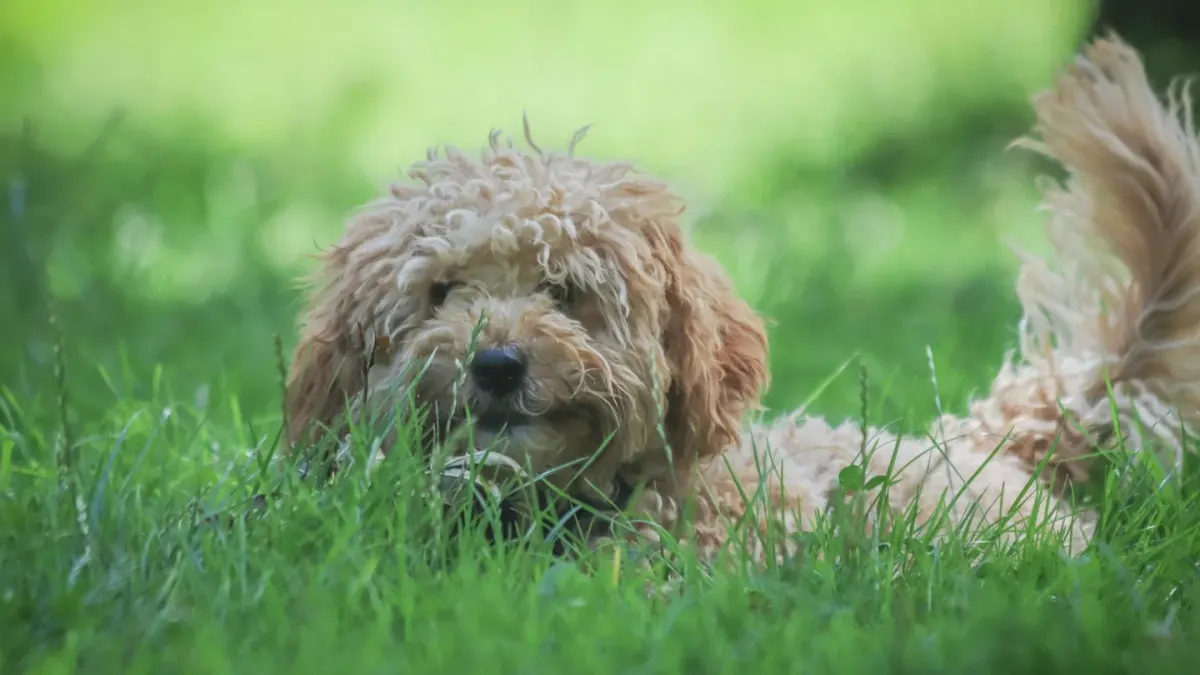
Picture two six-month-old puppies at the same weekend puppy class. One drags its owner toward every dropped treat on the floor, tail going like a metronome, ready to work for food the second anyone asks. The other checks in constantly, leaning against its person’s leg between exercises, content just to be near them. Both are doodles. One has a Labrador Retriever parent; the other has a Golden Retriever parent. Neither is misbehaving, and neither is “the calm one” by default. The difference in drive is a real pattern, not a guarantee, and it’s the piece most buying guides skip in favor of coat photos.
Same Poodle Parent, Different Working-Breed Half
Strip away the marketing names and both crosses share half their genetics: a Poodle, usually bred for trainability and a low-shedding coat. The other half is where the split happens. Labradoodles carry Labrador Retriever genetics, a breed developed to retrieve birds for hours in cold water without losing focus on the job. Goldendoodles carry Golden Retriever genetics, a breed developed for the same retrieving work but with a temperament standard that leans more toward biddable and soft-mouthed than relentlessly driven.
That single-parent difference explains most of what owners notice day to day. Labradoodles, as a general pattern, tend to run higher food drive and can be more physically persistent about getting what they want, whether that’s a ball, a walk, or your sandwich. Goldendoodles, as a general pattern, tend to be more people-focused and a little more willing to settle once the initial retriever energy burns off. Individual dogs vary widely within both crosses, and a poorly matched breeding pair can produce a mellow Labradoodle or a wired Goldendoodle just as easily.
The Coat Question Everyone Asks First
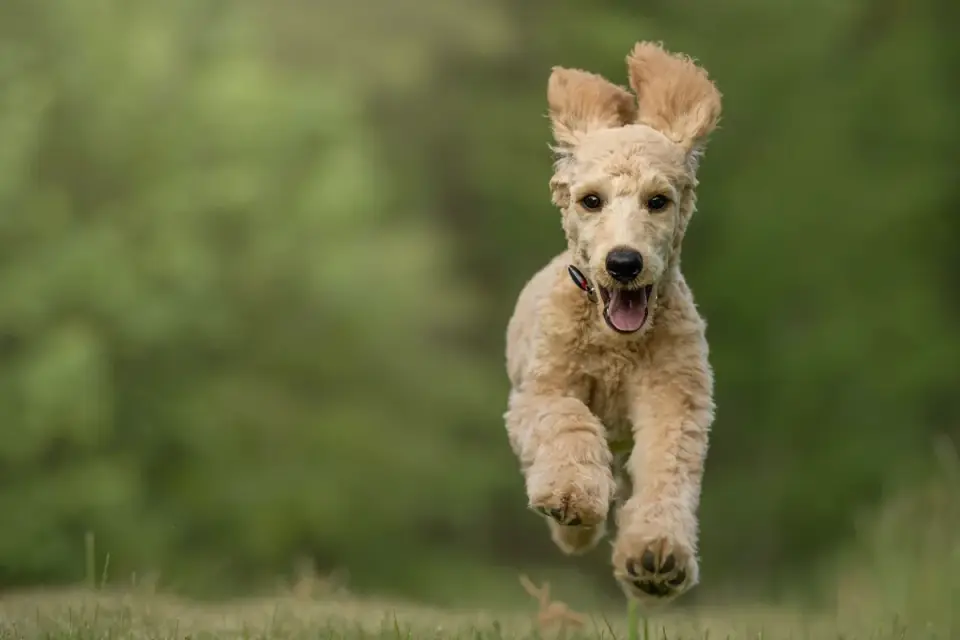
Most people start their doodle search with shedding and allergies, and it’s a fair question, but the parent breed matters less here than the generation. An F1 cross (first-generation Poodle x retriever) usually has a looser, wavier coat that sheds more than a purebred Poodle but less than the retriever parent. An F1B (an F1 bred back to a Poodle) usually has a tighter, curlier coat closer to a Poodle’s, with less shedding. Multigenerational doodles land anywhere in between depending on which ancestors dominate the litter. The Australian Labradoodle Association of America notes that its verified pedigree, not a generation label alone, is the only reliable way to track coat and health traits back through a specific line — a reminder that reputable breeders should be able to show you the paperwork, not just describe the coat.
In practice: if low shedding is your top priority, ask about generation and request to meet an adult relative of the litter, not just the parents. Puppy coats change dramatically by twelve to eighteen months, and a soft, wavy puppy coat can mature into something considerably coarser or curlier.
Consider the Household That Actually Owns the Dog
Consider a family that works from a home office, has a fenced yard, and can commit to a brisk 45-minute walk plus a training session most days. A Labradoodle from working-line parents will likely thrive there — the breed’s Labrador half wants a job, and daily structured exercise channels that drive into something manageable instead of destructive chewing or counter-surfing. Now consider a retired couple who wants a dog for slower walks, couch time, and visits from grandchildren. A Goldendoodle, particularly one from calmer-tempered parent lines, tends to adapt more easily to a lower-key routine because the Golden Retriever half was bred to be an even-keeled family companion first and a tireless retriever second. Neither household made a wrong choice; they matched the dog’s likely energy ceiling to their own daily bandwidth, which is the single best predictor of a good long-term fit. If your household leans toward the first scenario, the guide on which high-energy dog breeds need a job to stay happy is worth reading before you commit to either cross.
Health Considerations Worth Raising With Your Vet
Both crosses inherit joint structure from large-breed parents on both sides. A demographic analysis of canine hip dysplasia published via PMC documents how widely dysplasia prevalence varies across breeds and lines, which is exactly why hip and elbow screening on both parents matters more than the cross’s name. As documented in PubMed, the Orthopedic Foundation for Animals has tracked hip and elbow scores across breeds for decades specifically to help buyers and breeders make informed decisions rather than relying on assumptions about which mixes are “healthier.” Ask any breeder for OFA or PennHIP results on the sire and dam, regardless of whether you’re looking at a Labradoodle or a Goldendoodle. This is general education, not a diagnosis for any individual dog — bring specific concerns to your own veterinarian, since littermates from the same cross can land at opposite ends of the risk spectrum.
Coat maintenance also affects comfort. Curlier coats mat faster and trap heat differently than wavier ones, which matters if you live somewhere with hot summers; the same considerations that apply to any thick-coated breed’s cooling needs at home apply here too.
If you’re bringing home a doodle puppy of either cross, the same groundwork applies as with any large-breed puppy: a properly set-up crate for the first night, a vaccine and growth-plate-aware exercise plan through the first year, and an early start on socialization. Much of that first-year framework mirrors what’s covered in a guide on what to expect in a Labrador puppy’s first year, since both doodle crosses grow through similar large-breed timelines.
Making the Actual Decision
Start with your own week, not the dog’s coat color. Count the hours you can realistically give to structured exercise and training. Be honest about your grooming budget and tolerance for regular brushing or professional trims, since both crosses need consistent coat care regardless of parent breed. Then look for a breeder who health-tests both parents and can show you an adult dog from a similar pairing, so you’re judging the litter you’ll actually get rather than a stock photo of a fully grown doodle online. A well-matched Labradoodle and a well-matched Goldendoodle will both make excellent family dogs; a poorly matched one of either will frustrate you no matter which name is on the paperwork.
Frequently asked questions
Are Labradoodles or Goldendoodles more hypoallergenic?
Neither is guaranteed hypoallergenic. Coat type depends heavily on generation and individual genetics, not which parent breed was used. An F1B (backcrossed to Poodle) of either cross tends to shed less than an F1, but allergy reactions vary by person, so a supervised meet-and-greet before committing matters more than the label on the litter.
Which doodle is calmer indoors?
On average, Goldendoodles are reported as slightly more laid-back once past the puppy stage, while Labradoodles often stay more physically driven into adulthood. Both are individuals, and a bored dog of either cross will be restless regardless of pedigree.
Do Labradoodles or Goldendoodles have more health problems?
Both crosses can inherit joint issues common to their retriever and Poodle ancestry. Ask any breeder for hip and elbow screening results on both parents, and discuss breed-specific risk factors with your own veterinarian before you commit.
Sources
- About the Australian Labradoodle Association of America — Australian Labradoodle Association of America
- The Demographics of Canine Hip Dysplasia in the United States and Canada — PMC
- How the Orthopedic Foundation for Animals (OFA) Is Tackling Inherited Disorders — PubMed