
On this page
Maya and her 10-month-old shepherd mix had a perfect sit in the kitchen, a pretty good sit on the driveway, and no sit at all at the edge of the soccer field on Saturday morning. Three Labradors trotted past on the path about 30 feet away, tails up and tongues out, and her puppy locked on, leaned forward, and forgot his name entirely. She tried the cue twice, louder the second time, then laughed because everyone around her understood exactly what was happening. I hear this story weekly, and I start with the same expectation I give in the exam room: your dog is not being stubborn, he just has not learned that cue in that context yet.
Proofing simply means teaching the same behavior to hold up under new conditions. Dogs do not generalize well, so sit-next-to-the-fridge and sit-while-a-poodle-walks-by can feel like two different questions to them. That is normal learning, not disobedience.
What your dog is actually deciding when another dog appears
From your dog’s point of view, another dog is movement, scent, social information, and possible play all at once. Staying seated through that is hard impulse control, especially for adolescents and social, excitable breeds. Individual dogs vary widely in temperament and sensitivity, so your baseline matters more than any breed stereotype.
I ask owners to prioritize one cue at a time around other dogs, usually a sit, a touch, or a loose-leash check-in. Pick the behavior your dog already offers quickly at home with low distraction, then protect that success rate as you add challenge. The American Veterinary Society of Animal Behavior emphasizes rewarding desired behaviors to build reliable learning, which is exactly why we keep reinforcement frequent during proofing rather than testing to see how much the dog can tolerate.
Distance is the dial.
Build the ladder: distance, then movement, then closeness
Think in three layers and change only one at a time. Keep sessions short, upbeat, and preventive — we are building a habit, not staging a confrontation. For timing and session length ideas, many families pair this work with guidance on how long a training session should be to tire the brain.
Find the distance where thinking still works
Start where your dog notices other dogs but can still respond on the first ask. For many dogs that is across a park field or a parking lot, not on the same sidewalk. Mark and reward the moment your dog hears the cue and chooses you, even if the sit is slow or wobbly.
Add movement before you subtract space
Once a cue works while dogs are far and still, practice while dogs walk parallel at that same distance, then while they play or run farther away. Movement raises arousal faster than stillness, so expect to pause here longer than feels efficient.
Shrink space in small steps
When you get eight or nine easy wins out of ten tries, move a few steps closer and rebuild. If success drops, you moved too far too fast.
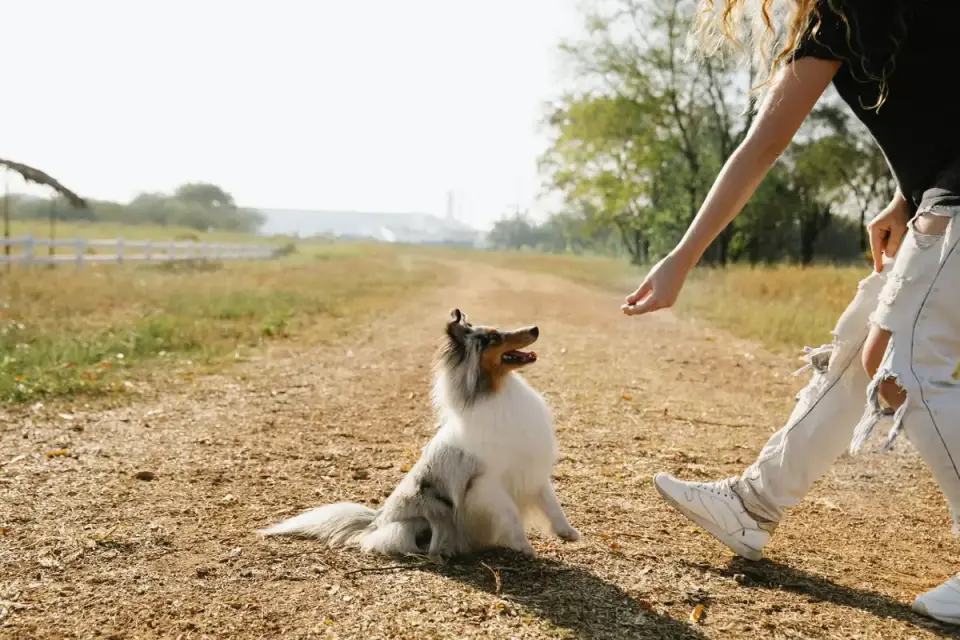
Last spring I worked through messages from an owner with a sturdy 18-month-old bully mix who could heel beautifully on an empty street and fell apart near the dog park fence. She had tried what a lot of us try: walking straight up to the fence for six straight reps to “get him used to it,” treat-pouch open, cue repeating. By the fourth sit-ask he was jumping, barking, and mouthing the leash, and by the sixth she was embarrassed and he was panting hard. It was not a training failure so much as a setup failure — closeness outpaced skill, and rehearsing the scramble taught him that other dogs mean frantic. We backed all the way across the lot and rebuilt the same cue where he could win again.
That reset points to the method I defend for most families: keep the success rate high and raise difficulty slowly. Flooding or repeated close-range tests may look faster, and some trainers argue dogs need to face the hard thing to learn it. I land where I do because rehearsing failure builds frustration for both ends of the leash, and calm repetitions build the neural pathway we actually want. Structure and realistic timelines may help support steady behavior over time, especially when reinforcement stays consistent.
The session plan I give most owners
Keep the mechanics boring so the learning can stick. Use high-value rewards only for work around dogs, deliver them quickly, and release with a clear word so the dog knows the effort ends.
Take frequent movement breaks, sniff breaks, and distance breaks. Short training loops with play in between keep arousal in the thinking zone, a pattern behavior resources like VCA Hospitals describe as central to reward-based training. If your dog cannot take food, freezes, fixates, or stops responding entirely, add distance immediately or end that rep — those are signs the environment is too demanding.
For owners weighing formats for this stage, it helps to compare group classes vs. private vs. online training before signing up for a busy class your dog is not ready for.
When to bend the usual ladder
Not every dog climbs straight up. A 4-year-old rescue terrier I followed by phone check-ins over three weeks could do a cheerful hand touch past calm dogs on a wide trail but shut down near bouncy off-leash adolescents. She was 14 pounds, newly adopted, and worried rather than rowdy — crouching, lip-licking, and tucking behind her owner’s legs. The usual advice to gradually close distance did not fit, so we bent it. We stayed at 40 to 50 feet, switched the goal cue from sit to a moving touch-and-go, and let her keep walking while earning rewards for glances back at her owner. By week three she was offering check-ins on her own as younger dogs passed on the opposite side of the field.
Use that same flexibility if your dog is fearful, reactive, senior, or easily overstimulated. Choose motion over stillness, greater distance over duration, and management over pride. A duck-behind-a-car cue, a U-turn, or a cheerful “let’s go” is good handling, not giving up. Talk with your own veterinarian about behavior concerns that do not shift with distance and rest, especially if stress signs are intense or persistent.
Do you proof recalls the same way? Mostly yes, with a long line for safety and only off-leash practice where it is legal and secure. And keep proofing maintenance in the routine you already have, like the structure in a puppy potty-training schedule that works — small, predictable reps beat occasional marathon sessions.
What would change if you measured progress in calm choices rather than perfect obedience?
For related context, read A Puppy Potty-Training Schedule That Works.
For related context, read Clicker vs. Verbal Marker Word: What Actually Changes How Fast Your Dog Learns.
Frequently asked questions
How far away should I start when proofing around other dogs?
Start where your dog notices dogs but still responds on the first cue, often across a field or lot. If they cannot take treats or respond, add distance.
My dog only ignores me around certain dogs. Is that normal?
Yes. Movement, play, size, and familiarity change difficulty. Treat each new context as a fresh step and rebuild distance first. Individual dogs vary, so adjust to your dog.
Sources
- Position Statements — American Veterinary Society of Animal Behavior