
On this page
A 3-year-old 54-pound mixed-breed dog taught me how much fit matters before the car ever moves. She arrived for a travel consult in a thin nylon harness clipped to a long seat-belt tether, panting through a closed mouth with the chest strap sitting high near her trachea. Her owner worried about carsickness, but what I saw was a restraint that would load the neck in a sudden stop and let a medium dog launch off the seat. We swapped to a padded chest-plate harness, shortened the tether to allow a sit and a lie-down but not a window lunge, and by day 10 of driveway practice she was lying down uncued when the rear door opened. The decision was not which brand to buy, but where force should go.
Why sudden stops punish the wrong attachment point
Deceleration is a physiology problem before it is a shopping problem. In a 30-mph stop, an unrestrained dog keeps moving forward at vehicle speed until something — dashboard, seatback, or tether — absorbs that momentum. A collar concentrates that load across the trachea, thyroid tissue, cervical spine, and jugular veins. A broad harness spreads it across sternum, ribs, and shoulder musculature, where bone and muscle can tolerate brief high load far better than airway cartilage.
A common question is whether nutrition changes that tolerance. It does, at the margins. Dogs with good lean muscle condition and sound joint nutrition recover from bracing and repeated travel better than deconditioned dogs, and the nutritional evidence supports maintaining healthy weight and adequate protein and omega-3 intake to may help support joint comfort and mobility during travel. That does not make a supplement a substitute for fit. It means the dog that can lie comfortably and brace without pain is less likely to fight the tether.
Crash-test work summarized by the Center for Pet Safety showed why attachment and excursion matter: harnesses that allowed excessive forward travel or failed at hardware put dogs and passengers at risk. General travel guidance from the American Veterinary Medical Association likewise emphasizes secure restraint in the back seat, never the front where airbags deploy. Distraction data from the National Highway Traffic Safety Administration reinforces the human side — an unrestrained dog is a projectile and a distraction.
Fit the chest, not the neck.
Start parked with the right harness shape
Forget the seat-belt clip for the first session. Fit the harness in the living room, where the dog can stand normally and you can see wrinkles, twist, and rub points.
Choose a Y-front or chest-plate harness with a low sternal attachment or a reinforced back attachment rated for car use, wide chest padding, metal hardware, and at least three adjustment points. Narrow straps, plastic choke chains, headcollars, and collar-only clips should not carry vehicle load. Deep-chested dogs often need a longer sternal panel; see Choosing a Harness for a Deep-Chested Breed: for shape details that transfer directly to car fit.
With the dog standing square, tighten until you can slide two flat fingers under every strap at the shoulder, chest, and girth. The front Y should sit on sternum, not pressing the windpipe when you lift gently forward. The girth strap should sit a full hand-width behind the elbows to avoid chafing. Spin the harness slightly — if it rotates easily, it is too loose to distribute load.
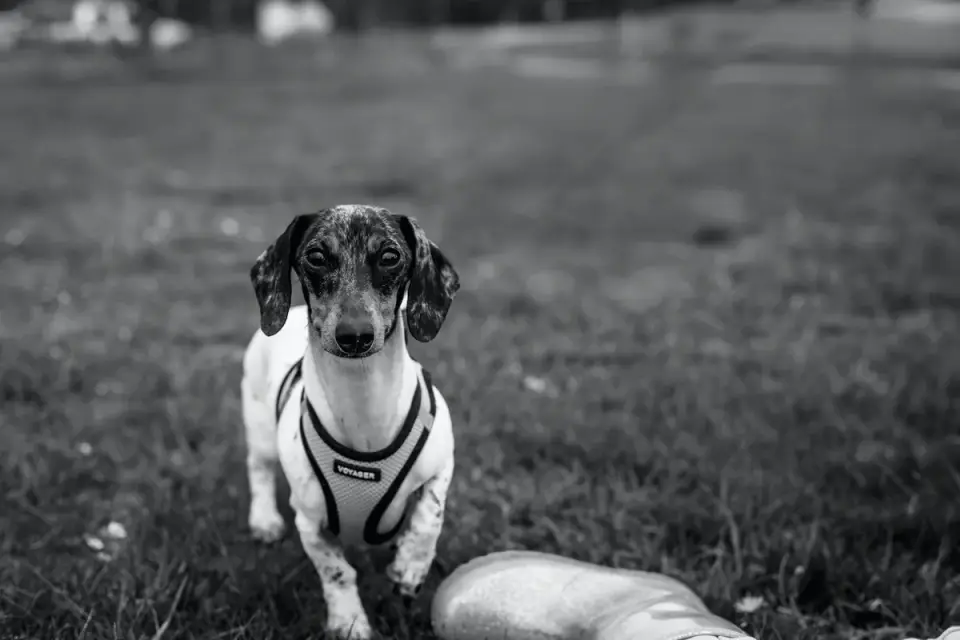
A 6-year-old 22-pound beagle mix showed the tradeoff I warn owners about. His owner had bought a thick padded harness one size up “for comfort,” then threaded the seat-belt tether through the back D-ring with six inches of slack added for legroom. Three weeks in, the dog had learned to duck a foreleg under the loose girth and ride with the chest plate twisted sideways, rubbing a raw spot behind the left elbow. We sized down, moved the girth forward one adjustment hole, and shortened the tether so he could circle once and lie down. The failed approach looked kinder. The snugger fit was the comfortable one because it stopped the slide that caused friction.
Fit the tether in the back seat, step by step
Work with the car parked, rear doors open, engine off. Put the dog in the middle of the back seat or on a secured crash-tested carrier base if small.
Clip the tether to the harness, not the collar, then to the seat-belt buckle, ISOFIX/LATCH anchor, or secured headrest loop per the manufacturer’s directions. Adjust length so the dog can sit, stand, and lie in sternal or lateral recumbency — but cannot reach the front seats, window ledge, or floorwell. For most 40- to 70-pound dogs that means 6 to 10 inches of usable slack from the anchor, not a full leash length. Test by luring the nose toward each front headrest; the shoulders should stop before the dog can climb over the console.
Check twist and lay. The tether should run flat from harness to anchor without wrapping a leg. Buckle the human belt if the system uses it, tug hard with your body weight, and listen for clicks that creep. Then load the dog forward gently by the harness — excursion past the seat edge means shorten one notch. Similar control logic applies on foot, which is why I often point owners to Bungee vs Fixed Leash for a Lunging Dog: Which One Actually Helps: when they confuse shock-absorbing give with car restraint.
Practice entry and exit on cue. Seat belt first off after parking, harness last off at home, so the dog never learns that lunging out the open door releases pressure.
The driveway test that reveals the loose strap
An 11-year-old 68-pound Labrador with stiff hips changed how I counsel senior-dog travel. She could still jump in, but she refused to lie down once tethered, standing trembling through a 20-minute drive while her owner assumed anxiety. By day 5 of retraining we found the real issue: the short tether forced a tucked sit that loaded her painful elbows, and the back-seat hammock slid under her feet. We lengthened the tether two inches, added a non-slip mat, parked the anchor slightly to the side so she could lie angled with forelegs extended, and cued a folded-blanket target. Once lying was pain-free, the trembling stopped. Older dogs vary widely in joint comfort, and a restraint that ignores arthritis will be fought no matter how crash-worthy the hardware.
Do a five-minute parked rehearsal, then a low-speed loop around the block. Watch breathing, lip licking, paw lifting, and attempts to chew the tether. Recheck the two-finger fit after movement — straps settle into coat and need one final snug. If you camp or road-trip often, pack restraint checks with water and shade planning as in Best Gear for Camping With a Dog: What Actually Earns a Spot in the Pack:.
Your dog will tell you the fit is right by doing less. Quieter settling, softer eyes, and a prompt lie-down mean load is on bone and muscle where it belongs, leaving the neck free for what it does best — sniffing the air from a safe distance behind the window.
Frequently asked questions
Should a dog seat belt attach to a collar or a harness?
Always to a well-fitted chest harness, never to a collar or headcollar. A harness spreads stopping force across sternum and ribs; a collar loads the trachea and neck.
How tight should the harness be for car travel?
Snug enough that you can slide two flat fingers under each strap, with the chest plate on sternum and the girth a hand-width behind the elbows. If it rotates or allows a leg to duck under, size down or readjust.
How much tether slack should my dog have?
Enough to sit, stand, turn, and lie down, but not enough to reach the front seats, window ledge, or floor. For many medium and large dogs that is only a few inches of usable slack from the anchor.
Sources
- Center for Pet Safety — Center for Pet Safety
- Traveling With Your Pet — American Veterinary Medical Association
- Traffic Safety — National Highway Traffic Safety Administration