On this page
- What “Poodle” Actually Means on Paper
- What “Doodle” Actually Means — and Why It’s Messier
- Coat, Shedding, and the Allergy Question
- Temperament and Predictability
- The Health Conversation: What the Doodle Cross Actually Changes
- Size and Predictability: Poodle Varieties vs Doodle Generations
- Where I Land: My Actual Recommendation
A woman sat in my exam room last spring with a nine-month-old, forty-two-pound dog she’d bought as a “mini Goldendoodle.” He weighed almost as much as her Standard Poodle at home, his coat was shedding in clumps by the baseboards, and she wanted to know what had gone wrong. Nothing had gone wrong, exactly — she’d just been told doodle and Poodle were close enough to the same thing that the details didn’t matter. In my practice, that’s one of the most common misunderstandings I see walk through the door, and it usually shows up around month nine or ten, right when a puppy’s adult coat and adult size start to reveal themselves.
The short version: a Poodle is a purebred dog with a closed studbook, a written breed standard, and a couple hundred years of selection behind its coat, size, and temperament. A doodle is a cross — most often Poodle mixed with a Labrador, Golden Retriever, or another breed — and depending on the generation, it can land anywhere between its two parent breeds, or resemble one parent much more than the other. That single structural difference explains almost everything else people ask about: shedding, size, temperament consistency, and the health conversation.
What “Poodle” Actually Means on Paper
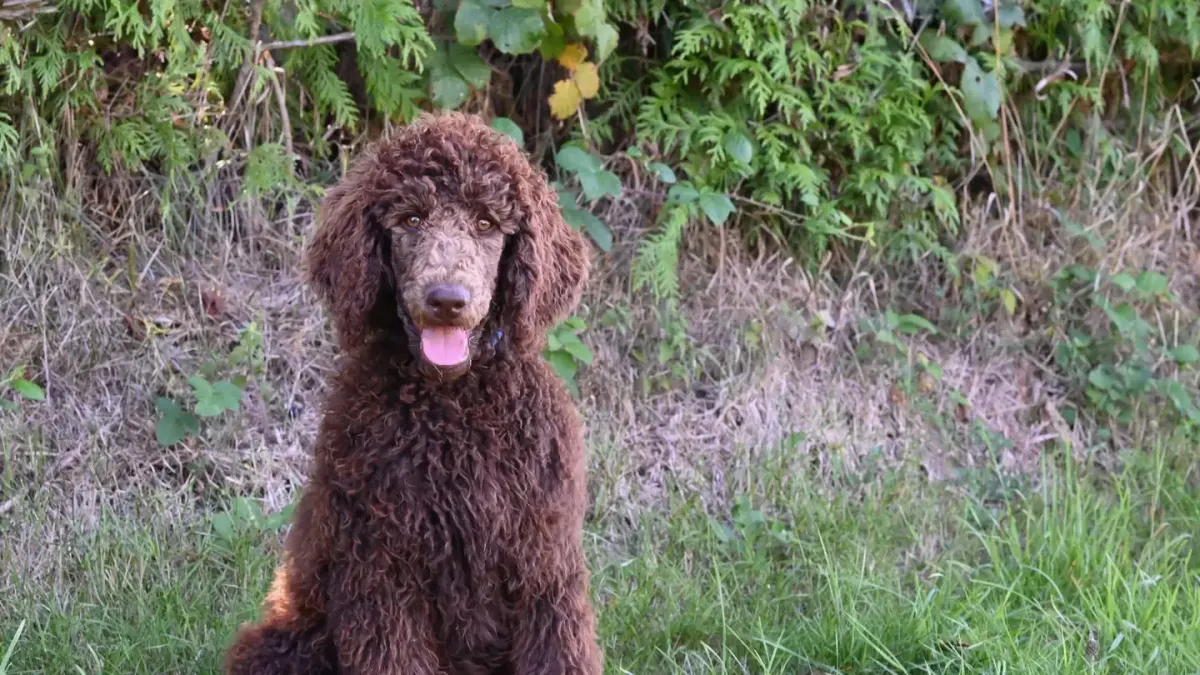
The Poodle isn’t one dog — it’s three official size varieties judged to the same written standard. According to the Official Standard of the Poodle, Standards must stand more than 15 inches at the shoulder, Miniatures are 15 inches and under, and Toys top out at 10 inches, with all three sharing the same build, proportions, and dense, curly or corded coat. That standard is a closed document — the same criteria for every registered litter, every generation, judged the same way in the ring.
The AKC’s Poodle (Standard) breed page describes the dog as an “elegant athlete,” and the Poodle Club of America — the breed’s parent club — maintains and interprets that same standard for breeders. What that means practically: when a reputable breeder produces a litter of Standard Poodles, the puppies are working from a genetically consistent template. Size, coat texture, and structure fall inside a narrow, predictable range because that’s what generations of selective breeding were built to do.
What “Doodle” Actually Means — and Why It’s Messier
“Doodle” isn’t a breed. It’s a marketing umbrella over a cross between a Poodle and something else, and the details of that cross change the outcome a great deal. An F1 doodle is a first-generation cross — one purebred Poodle parent, one purebred parent of the other breed — and its coat, size, and temperament can lean toward either parent, or land somewhere in between, with real litter-to-litter variation. An F1b is bred back to a Poodle, which tends to push the coat curlier and the shedding lower, but “tends to” is doing a lot of work in that sentence. Multigenerational doodles (F2, F3, and beyond) are doodle bred to doodle, and without careful selection, that can reintroduce more variability, not less.
None of this is registered or standardized the way a Poodle litter is. There’s no closed studbook enforcing a size range or coat type across doodle breeders, which is exactly why one “mini Goldendoodle” can mature at twenty-five pounds and another at fifty. If predictability matters to your household — a specific size for an apartment, a specific coat for a family member’s allergies — that’s the trade-off worth understanding going in.
Coat, Shedding, and the Allergy Question
This is where I get the most anxious phone calls. No dog is truly hypoallergenic, doodle or otherwise, and coat type in a doodle is inherited unevenly depending on generation and which parent’s genes came through stronger. Readers weighing this specifically should look at our deeper breakdown of Do Doodles Really Not Shed?, which walks through the three doodle coat types and why generation doesn’t guarantee a low-shedding result.
A Poodle’s coat is far more predictable: it sheds minimally and requires regular clipping, consistently, because that’s what the closed breed standard selects for. A doodle’s coat is a genetic roll of the dice shaped by which grandparent’s coat genes dominate — some doodles shed close to a Labrador, some shed almost nothing like a Poodle, and most land somewhere in between. If a family member has allergies, that uncertainty is the single biggest reason I steer people toward meeting the actual adult dog, or its parents, before committing.
Temperament and Predictability
Poodles are frequently described as highly trainable, alert, and people-oriented — traits reinforced generation after generation by breeding to the same standard. A doodle’s temperament is a blend, and which parent breed “wins out” on drive, energy, or independence varies by litter. A Labradoodle from field-line Labrador stock can be a very different daily companion than one from a mellower Poodle-dominant line, even within the same litter. Readers comparing two specific doodle crosses head-to-head may find our breakdown of Labradoodle vs Goldendoodle useful for seeing how the non-Poodle parent breed shifts the picture.
One thing I tell every client: individual dogs vary widely within any breed or cross, and a written standard describes a tendency, not a guarantee. Meet the individual puppy, or better, the parents, before you build expectations around a label.
I had a family bring in a Bernedoodle around this same age last year — seven months, sixty pounds already, still climbing. They’d budgeted for a “medium” dog based on a breeder’s website photo of an adult that turned out to be a much smaller multigenerational litter than theirs. We spent that visit talking less about diet or vaccines and more about what “doodle” had actually promised them, which in that breeder’s case was almost nothing concrete. I see this exact conversation play out several times a year: the owners aren’t upset about the dog they got, they’re working through a mismatch between the size or coat they expected and the one genetics actually delivered. That gap is almost always smaller with a purebred Poodle, because the standard itself narrows the range before the puppy is even born.
The Health Conversation: What the Doodle Cross Actually Changes
There’s a popular idea that crossbreeding automatically produces a healthier dog through “hybrid vigor” — broader genetic diversity diluting the recessive conditions concentrated in a purebred line. That’s a real genetic concept, but it isn’t a blanket guarantee, and it depends heavily on the health of both parent breeds and how carefully a breeder screens them. A cross between two breeds that each carry hip or elbow dysplasia risk doesn’t erase that risk just by mixing lineages. According to OrthoDog, Labradoodles and Goldendoodles — both larger, active crosses — remain susceptible to the same orthopedic conditions common in their larger parent breeds, including hip dysplasia and arthritis, which is exactly what you’d expect given that both parent breeds carry that risk independently.
What actually protects a puppy, doodle or purebred, is the same short list every time: hip and elbow screening on both parents (OFA or PennHIP), eye and cardiac clearances where the breed calls for them, and a breeder willing to show you the paperwork rather than just tell you about it. A closed-registry Poodle breeder has generations of screened ancestors to draw on. A doodle breeder has to screen both parent lines independently, and not every doodle breeder does. Ask to see it either way — this is the one place where “trust me” isn’t a substitute for a document.
Size and Predictability: Poodle Varieties vs Doodle Generations
If size is your deciding factor, the Poodle side of this comparison is the more reliable bet. A Toy, Miniature, or Standard Poodle falls inside a defined height range because the standard enforces it; our comparison of Toy Poodle vs Miniature Poodle walks through how tight that range actually is in practice. A doodle marketed by size category — “mini,” “medium,” “standard” — is describing an estimate based on the parent dogs’ sizes, not a guaranteed outcome, and generation (F1 vs F1b vs multigen) adds another layer of variability on top of that.
None of this means doodles are a bad choice. It means the size on the puppy listing is a prediction, not a spec sheet, and it’s worth asking the breeder directly what the sire and dam actually weigh as adults — not what the breed name implies.
Where I Land: My Actual Recommendation
I’m not going to tell every client to buy a Standard Poodle over a Goldendoodle, because that’s not really the choice most families are making. The honest comparison is between predictability and flexibility. A purebred Poodle gives you a known quantity: a defined size range, a low-shedding coat that’s been selected for over generations, and a temperament profile with decades of consistency behind it. A doodle gives you more flexibility in where you find a puppy and, often, a lower price point, in exchange for accepting real uncertainty in adult size, coat, and temperament — uncertainty that only gets larger the further you get from a careful, health-tested F1 or F1b breeding program.
If predictability matters more to your household than anything else — a tight apartment, a family member with allergies, a very specific size ceiling — I steer people toward a purebred Poodle from a breeder who screens for hips, elbows, and eyes. If you’re drawn to a doodle for its temperament blend or its price, my one non-negotiable is the same health screening standard, on both parent breeds, not just one. Ask for it in writing before you ask about coat color.
Whatever you choose, ask your own veterinarian to weigh in on the specific breeder or litter you’re considering — individual dogs, and individual breeding programs, vary more than any general comparison can capture.
Frequently asked questions
Is a doodle always smaller than the non-Poodle parent breed?
Not necessarily. Adult size depends on which parent's genes dominate and which generation (F1, F1b, or multigenerational) the puppy comes from, so a "mini" label describes an estimate, not a guarantee.
Are doodles hypoallergenic?
No dog is truly hypoallergenic. Doodle coat type varies by generation and lineage, so shedding and dander production can range from Poodle-like to much closer to the non-Poodle parent breed.
Do doodles have fewer health problems than purebred Poodles?
Not automatically. Crossbreeding can broaden genetic diversity, but a doodle can still inherit conditions like hip dysplasia from either parent breed, which is why screening both parent lines matters regardless of whether a dog is purebred or a cross.
Sources
- Official Standard of the Poodle — American Kennel Club
- Poodle (Standard) — American Kennel Club
- AKC Breed Standard — Poodle Club of America
- Are Labradoodles More Likely to Get Hip Dysplasia and Arthritis? — OrthoDog