On this page
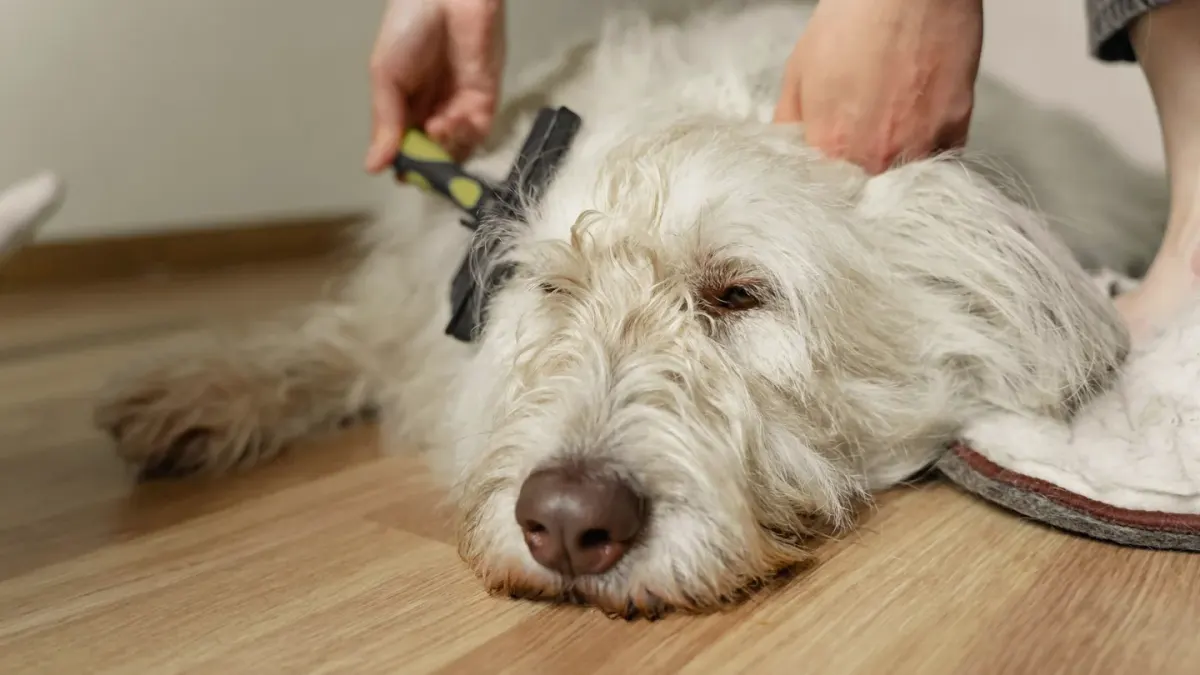
I see it every week in my practice: an owner walks in with a Goldendoodle they chose specifically because they thought they’d gotten a low-shedding dog, and they’re standing there covered in hair. Sometimes I see the opposite—a owner who expected shedding and got a dog who barely sheds at all. The frustration often comes from a mismatch between what they were sold and what they’re living with.
The real story about Goldendoodles and shedding isn’t whether they shed. It’s how much, and why some dogs in the same litter can be totally different.
What Coat Genetics Actually Tell You
A Goldendoodle’s coat is shaped by genes from both parents—and those genes are the only thing that matters when it comes to shedding. Goldendoodle Coat Types: Complete Guide to Every Coat: Crockett Doodles reports that dog coat texture is controlled by just three main genes: RSPO2, FGF5, and KRT71. Each dog inherits a mix from the Poodle side and the Golden Retriever side, and that inheritance is what determines how much hair will end up on your carpet, your clothes, and in your vacuum.
This is important: shedding isn’t random. It’s not about the dog’s health or how well you care for the coat (though grooming matters for other reasons). It’s inheritance. A dog with genes that code for a curly coat will shed far less than a dog with genes that code for a straight coat—even if they were raised in the same household with identical diets and exercise.
One owner came to me with two littermates, both female, both from parents the breeder assured her would be “minimal shedding.” The first dog had a beautiful loose wave to her coat and barely shed enough to notice. The second dog developed a straighter, denser coat and dropped hair constantly—especially in summer. Same genetics lottery, different outcomes. The owner had to buy a second vacuum and accept that her house would have dog hair on the tile, no matter how often she swept. She called her vet twice to check if something was wrong with the second dog’s skin or health. It wasn’t. It was just coat.
The Three Coat Types and What They Mean for Shedding
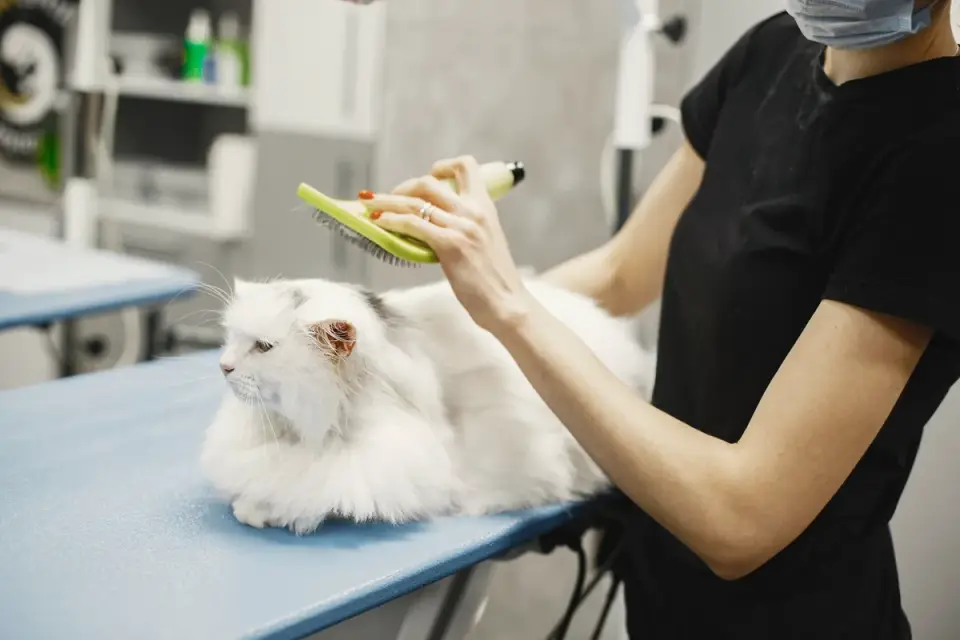
Your Goldendoodle’s coat falls into one of three categories, and each has a different shedding profile.
Straight coats are the most similar to a Golden Retriever’s. They’re flat against the body, tend to be finer, and shed the most of the three types. If your dog has a straight coat, expect shedding that resembles a regular retriever mix—not catastrophic, but noticeable year-round with heavier shedding twice a year.
Wavy coats are the middle ground and the most common. They have loose, S-shaped waves and shed moderately. You’ll notice hair, but not at the level of a straight coat. Wavy-coated dogs need brushing several times a week to prevent mats and to help manage loose hair.
Curly coats look the most like a Poodle. They shed the least of the three types because the curl pattern traps loose hair rather than letting it fall. The tradeoff is maintenance: curly coats mat easily and need more consistent grooming to stay comfortable. If shedding is your main concern, a curly coat is what you wanted. But you’ll be paying for it in grooming time and expense.
PetFul’s guide to Goldendoodle shedding notes that curly coats require daily brushing ideally and professional grooming every 4 to 6 weeks. That’s not just an aesthetic preference—mats trap moisture and can lead to skin irritation.
Generation Matters, But It’s Not Predictable
You’ll often hear breeders use terms like F1, F1B, F2, and Multigen. These refer to how much Poodle versus Golden Retriever genetics are in the dog’s background.
An F1 Goldendoodle is 50% Poodle and 50% Golden Retriever. The problem for shedding predictability is that this 50-50 mix creates the most variable outcomes. Two F1 littermates can have totally different coats because they drew different genetic cards. One might be curly and low-shedding; another might be straight and shed heavily.
An F1B Goldendoodle is 75% Poodle and 25% Golden Retriever. Higher Poodle genetics stack the odds toward a curly or wavy coat with lower shedding. F1B dogs are more reliably low-shedding than F1 dogs, but they still vary. F1 vs F1B Goldendoodle: 5 Main Differences Explained: Crockett Doodles notes that F1B dogs typically develop wavy or curly coats with low to moderate shedding, making them more predictable for families concerned about allergies or hair management.
The takeaway: F1B doesn’t guarantee a low-shedding dog, but it shifts the odds. F1 gives you the full range—and that range can be shocking within the same litter.
What Makes a Dog Shed More Than Expected
Sometimes an owner will tell me their Goldendoodle suddenly started shedding more heavily, or they’re shedding way more than seems normal for their coat type. This usually comes down to a few factors.
Grooming neglect. A curly or wavy coat that isn’t brushed regularly will mat, and mats trap moisture and irritate skin. That irritation can trigger heavier shedding. You won’t see the shedding clearly because the mats are holding the loose hair—but once those mats are groomed out, the hair comes down like a snowstorm for a few weeks after.
Seasonal changes. Many Goldendoodles, even the low-shedding ones, have an uptick in shedding during seasonal transitions. Spring and fall are common triggers. It’s not dangerous, but it’s real, and it means more frequent brushing during those months.
Underlying health issues. Here’s where an owner really needs to check with a vet. Excessive shedding can sometimes signal allergies, parasites, hormonal imbalances, skin infections, thyroid disorders, or stress. Vetericyn’s vet-written guide to Goldendoodle shedding emphasizes that if you notice a sudden or significant increase in shedding beyond what’s normal for your dog’s coat type, it’s worth a vet visit to rule out medical causes.
I had an owner call me about her Goldendoodle, a curly-coated female, who suddenly started shedding heavily in patches. The dog wasn’t itching excessively, wasn’t lethargic, seemed totally normal otherwise. We did a quick exam and found early signs of allergies—probably environmental, maybe food-related. Once we addressed the allergies with some dietary changes and monitoring, the shedding returned to baseline. If she’d accepted the shedding as “normal for Goldendoodles,” she would have missed the chance to help the dog be more comfortable.
Grooming Is About Management, Not Prevention
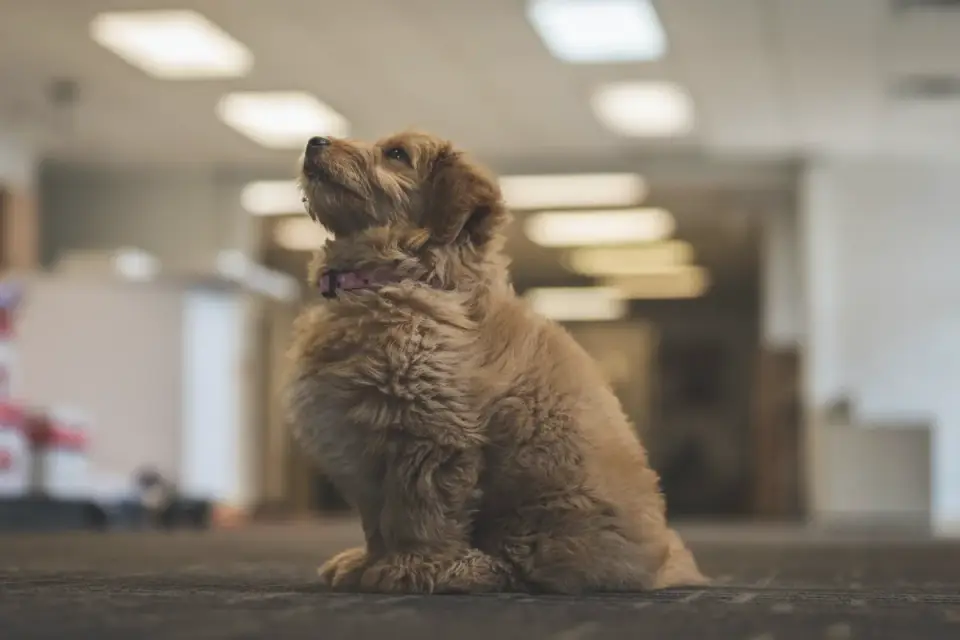
Brushing your Goldendoodle won’t stop her from shedding—if her genes code for shedding, she’ll shed. But regular brushing does two important things: it removes loose hair before it ends up on your furniture, and it keeps you aware of what’s actually happening with her coat.
If your dog has a curly or wavy coat, aim for daily brushing if you can manage it, or at least three to five times a week. That sounds like a lot, but 5 to 10 minutes with a slicker brush can prevent the mats that will eventually require expensive professional grooming to untangle. For straight coats, twice or three times a week is usually enough.
Brown Veterinary Hospital recommends brushing removes stray hairs and evenly distributes oils that keep the skin soft and comfortable. During times of heavy seasonal shedding, you might bathe your dog twice a month instead of every month or two—bathing helps loosen and remove the loose coat.
If grooming at home feels overwhelming, professional groomers are worth the investment, especially for curly-coated dogs. They have the right tools and expertise to remove dead hair effectively and keep the coat healthy.
Making a Realistic Expectation
When I talk to owners about Goldendoodles, I try to be honest: some are genuinely low-shedding, and some shed as much as a Golden Retriever. The marketing around the breed has often promised otherwise, and that’s set a lot of people up for disappointment.
Genetics is the only honest answer. If you’re choosing a Goldendoodle and shedding is a deal-breaker, ask the breeder about the parents’ coats and learn what F1 versus F1B actually means. Look at photos of the dam and sire. Ask whether the breeder has followed puppies from previous litters as they grew and developed their adult coats—that’s real data.
If you already have a Goldendoodle and shedding is heavier than you expected, it’s worth a vet check to rule out health issues. But often, the answer is just: this is your dog’s genetics, and the way forward is grooming strategy and acceptance.
For more on how to choose between Doodle types, see Labradoodle vs Goldendoodle: Which Doodle Fits You. If you’re considering the parent breeds to understand what you might be getting, Labrador vs Golden Retriever: How to Choose covers the differences.
Sources
- Goldendoodle Coat Types: Complete Guide to Every Coat — Crockett Doodles
- F1 vs F1B Goldendoodle: 5 Main Differences Explained — Crockett Doodles
- Do Goldendoodles Shed? Coat Types and Allergy Facts — PetFul
- Do Goldendoodles Shed — Vetericyn
- June Newsletter: How to Reduce Excessive Dog Shedding — Brown Veterinary Hospital