On this page
That guilty, worried, almost-human look is usually a brow muscle doing its job, not a confession.
You see it in the kitchen when eyebrows lift and eyes go round. You swear your dog looks sad, sorry, or just like a person. In day-to-day practice, vets often see owners read that expression as proof of what the dog is thinking.
The kinder read is simpler: dogs make faces that work on people, and we fill in the rest.
What makes a dog’s face look so human?
It comes down to small muscles around the eyes, plus the way we are wired to notice faces.
Dogs developed a muscle called the levator anguli oculi medialis that lifts the inner brow. Wolves have much less of it. When dogs contract it, the eyes look larger and more infant-like, which tends to draw a caregiving response from people.
That finding comes from comparative anatomy work published in the Proceedings of the National Academy of Sciences, where researchers dissected wolves and dogs and then coded shelter-dog expressions during human interaction.
So your dog is not trying to look human. Your human brain is just quick to see human in a brow lift.
Why the “puppy eyes” work so well
Raised inner brows expose more of the white around the eye and change the shape for a split second. To us, that reads as worry or sadness.
To a dog, it is often attention-seeking movement shaped by years of living with people. Dogs that used it more were adopted faster in the shelter observations, which is a strong reward for repeating it.
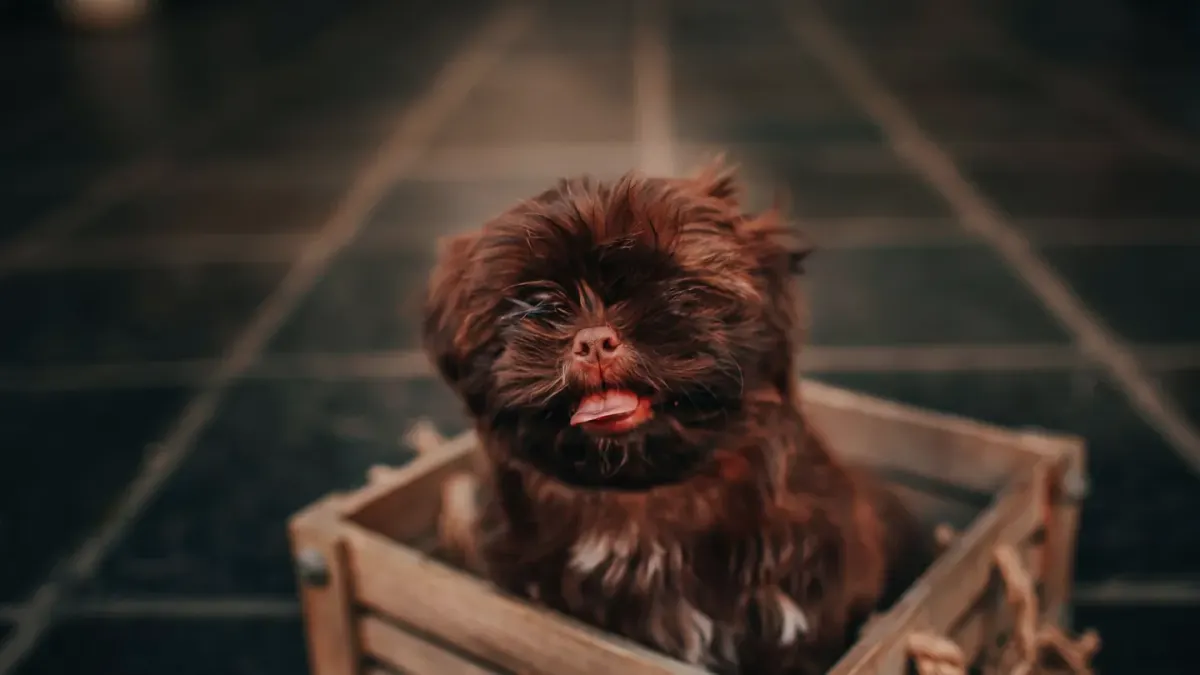
Individual dogs vary widely, though. Some are very expressive. Others have heavy brows, loose facial skin, dark markings, or a flatter face that makes the same effort harder to see.
The faces owners misread most
Here is where I get decisive: watch the whole body before you trust the face.
A furrowed brow, wide eyes, yawning, lip licking, turning away, or showing the whites of the eyes can signal stress or discomfort. But the same face during calm play can mean nothing at all. Context decides.
Take Roger and Rosalie, his 3-year-old spayed Cavapoo in Chula Vista. Roger was convinced Rosalie looked “guilty” after chewing a brush handle because her brows lifted and she avoided eye contact. When they started tracking what happened before the look, the pattern was clearer: the face appeared within 10 seconds of a raised voice, whether she had chewed anything or not.
That is classic. Vets often see this with housetraining, counter surfing, and grooming struggles.
Do not scold the face.
A quick check you can use at home
Pause and score three things: body, situation, and repetition.
- Body: Is weight shifted away, tail tucked, ears pinned, panting, or frozen? Relaxed and wiggly means something very different from stiff and still.
- Situation: Did a loud sound, stranger, nail trim, bath, or direct stare just happen? Stress faces cluster around triggers.
- Repetition: Does it happen every time before meals, walks, or brushing? Anticipation can mimic worry.
If you are working on brushing or bathing tolerance, keep handling calm and short, then build up. This kind of low-pressure routine pairs well with the approach in At-Home Grooming vs a Professional Groomer: How to Split the Job and a simple setup from Essential Dog Grooming Tools for Beginners.
That face is information. It is not a sentence.
Do some breeds look more human than others?
Yes, and coat and shape do a lot of the work.
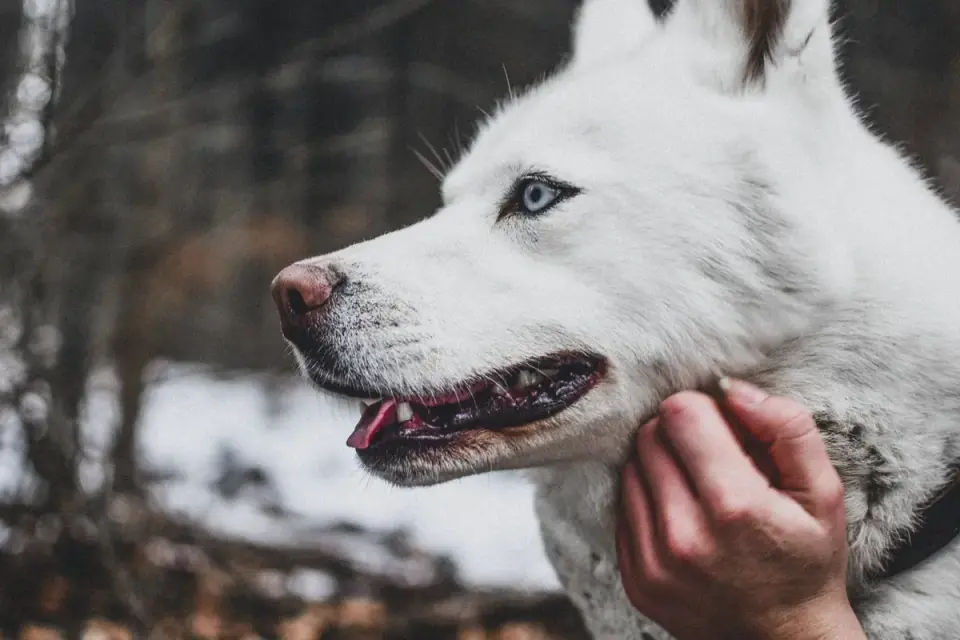
Breeds with forward-facing eyes, shorter muzzles, beards, bangs, or round skulls tend to read as more human — think Cavalier King Charles Spaniels, Shih Tzus, Boxers, Pugs, Cocker Spaniels, and many doodle mixes. Huskies like Phoebe, Dana’s 8-year-old Siberian Husky in Clearwater, can look strikingly expressive because pale eyes and facial masks emphasize every glance across a 20-foot living room.
Still, expression is not temperament. A “sad” face does not mean a calm dog, and a “smiling” face does not guarantee friendliness. Breed standards describe structure and general traits, not promises about any one dog.
Research on human attention supports why we get pulled in: adult humans tend to respond strongly to infant-like facial features, a pattern described in reviews of the baby schema literature indexed by the National Library of Medicine. Dogs happen to trigger much of the same circuitry.
How to respond without over-reading it
Support calm communication rather than rewarding the worried look by accident.
If the brow lift comes with loose body language, you can answer it lightly: talk, invite play, or ask for a known cue and reward that. If it comes with stress signs, lower the pressure. Increase distance, drop the volume, offer a break, and try again in smaller steps.
For grooming faces in particular, prevention helps maintain comfort over time. Short sessions, treats for stillness, a non-slip surface, lukewarm water, and gentle drying reduce the squinty, pinned-ear look far better than any “sad face” lecture.
Be honest where the evidence is thin: we cannot prove what a dog feels from one expression. Fear Free handling principles emphasize reading subtle body language and adjusting the environment rather than assuming intent, a framework outlined by Fear Free Pets.
A skeptical friend might ask: “If it’s just muscle, why does it feel so personal?”
Because it is personal in effect, just not in the way it feels. Your dog learned what gets a soft voice, a treat, or a pause in handling. That learning is real, even when the “guilt” or “smile” is our translation.
Trust patterns, not single glances. Your dog will be easier to read, and easier to help.
Frequently asked questions
Do dogs make puppy eyes on purpose?
Not in a human-plotting sense. Dogs vary, but research found dogs use the inner brow raise more around attentive people, and expressive dogs were adopted faster. It is learned communication that works, not proof of guilt or sadness.
Does a guilty look mean my dog knows they did something wrong?
Usually no. That tucked, wide-eyed look most often follows your tone, posture, or the situation — not memory of the rule. Look at what just changed in the room and at body stiffness, tucking, or avoidance before assuming guilt.
Which dogs have the most human-like expressions?
Forward-facing eyes, round heads, beards, and clear brow markings can make expressions easier for people to read. Cavaliers, Cocker Spaniels, Shih Tzus, Pugs, Boxers, and many companion mixes often look very human, but any individual dog may be more or less expressive.
Sources
- Evolution of facial muscle anatomy in dogs — Proceedings of the National Academy of Sciences
- Baby schema in human and animal faces induces cuteness perception and gaze allocation — National Library of Medicine
- Making Veterinary Visits Fear Free — Fear Free Pets