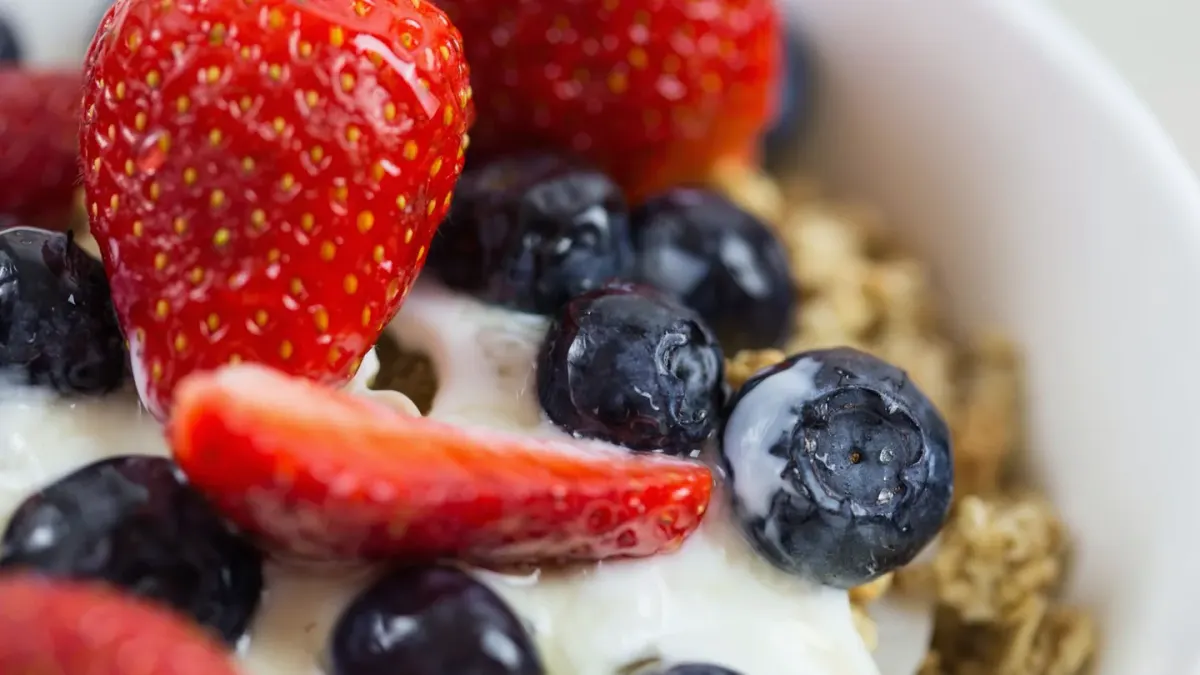
So can dogs eat strawberries? Picture a Saturday farmers market, a kid balancing a paper carton of berries against her chest, and a leashed dog underneath the folding table working the pavement for anything that drops. A strawberry rolls off the top of the carton. The dog gets to it before anyone else does, and the owner freezes for a second, running through everything she half-remembers about dogs and fruit — grapes are bad, right, is this one of those? That half-second of doubt is the most common version of this question, and the short answer is reassuring: strawberries are not on the dangerous list. The longer answer is where the actual decisions live, and that’s the part worth sitting with.
According to the American Kennel Club, strawberries are a good source of fiber for dogs when fed in moderation, alongside vitamin C and antioxidants. That’s a real nutritional case, not marketing language, but “in moderation” is doing a lot of work in that sentence, and it deserves more precision than most articles give it.
What actually happens in a dog’s gut when strawberries show up? A dog’s digestive tract handles fruit sugar and fiber differently than a human’s does, and the fiber in strawberries is the more interesting part clinically. It’s mostly soluble and insoluble fiber working together, which can slow transit slightly and add bulk to stool — useful in the right dose, unhelpful in excess. PetMD notes that a cup of strawberries carries roughly seven grams of natural sugar, which is not alarming for a healthy adult dog eating a few berries but adds up fast for a smaller dog or one already managing weight or blood sugar. This is where I’d rather reach for both the imaging study and the acupuncture needle than pick a side reflexively — the fiber case for strawberries is genuinely defensible, and so is the caution around sugar load in a dog that doesn’t need extra calories. Both things can be true in the same bowl.
How much strawberry is actually reasonable for a dog? Size matters more than enthusiasm here. A small dog does fine with roughly one berry as an occasional treat; a medium dog can handle two or three; a large dog can take a small handful without much concern, assuming it’s otherwise healthy and the strawberries stay an occasional add-on rather than a daily habit. Treats of any kind — strawberries included — should stay near ten percent of a dog’s daily calories, with the rest coming from a complete, balanced diet built for that dog’s life stage.

What about the stems, syrup, and dehydrated snacks? Strip the stems and leaves before serving; they’re not highly toxic, but they’re fibrous and hard for a dog to break down, and they can cause the kind of stomach upset that lands you back at the vet’s office wondering what happened. Whole berries are also a real choking hazard, particularly for small-breed dogs and fast eaters, so slicing is not an optional step — it’s the difference between a treat and an emergency. Skip anything processed. Canned strawberries, jam, syrup-packed fruit, and flavored yogurt often carry added sugar or artificial sweeteners, and xylitol specifically is toxic to dogs even in small amounts. If a label lists xylitol or you can’t confirm the ingredient panel, don’t feed it.
A senior Border Collie I’m picturing — not a specific patient, just a composite of the dogs I see written about in owner forums week after week — had been a reliable eater her whole life until her person switched her to a lower-fat diet after a pancreatitis scare. The owner wanted to keep treat time going without undoing months of careful management, and strawberries became the compromise: a single berry, sliced, twice a week, tracked against the day’s total food. That’s the pattern worth copying. The fruit isn’t the risk. An untracked, generous hand is.
Which dogs should be more careful with strawberries? Dogs with diabetes, a history of pancreatitis, or a weight problem should get smaller portions, less often, and only after checking with their own veterinarian about how fruit fits their specific plan. The same goes for any dog on a prescription or limited-ingredient diet where an added food could complicate things — a quick call to your vet costs less than guessing. If you’re navigating a broader diet change, our guides on switching a senior dog to a new food and sweet potato prep and portions cover the same size-and-sensitivity logic that applies here.
The short version: fresh, plain, sliced strawberries are a reasonable occasional treat for most healthy dogs, and the fiber and antioxidant case for them is real. The caution isn’t about the fruit itself — it’s about portion, prep, and knowing which dogs need a smaller allowance. If you’re already being careful about other foods that carry real risk, like the ones covered in which nuts are toxic to dogs, strawberries are a comparatively easy yes, as long as you keep the serving small and the ingredient list clean.
Frequently asked questions
Can puppies eat strawberries?
A small sliver is usually fine once a puppy is established on solid food, but treats including fruit should stay a thin slice of the daily calorie total while the puppy is still growing. Ask your own veterinarian before adding any new food to a young dog's routine.
Are frozen strawberries okay for dogs?
Plain frozen strawberries, without added sugar, can work as a cool-weather treat and may be gentler on a dog that gulps food. Cut them small first, since a frozen chunk is harder and more likely to be swallowed whole.
Do strawberries whiten a dog's teeth?
You'll see this claim on plenty of pet blogs, but there isn't solid veterinary evidence behind it, and the natural sugar content works against dental health more than it helps. Treat strawberries as a treat, not a dental strategy.
Sources
- Can Dogs Eat Strawberries? — American Kennel Club
- Can Dogs Eat Strawberries? Benefits and Risks — PetMD