
On this page
The bowl always shows up at the same moment: the opening credits are rolling, the popcorn is still warm, and a dog who has been perfectly patient all evening suddenly remembers she has a nose. I’ve watched this exact scene play out with a client’s terrier mix who could locate a single dropped kernel under a couch in under four seconds, buttered or not. The owner’s question wasn’t really about popcorn. It was about whether the thing making her dog so happy was actually fine, or whether she’d been quietly rolling the dice for years without knowing it.
That’s the right question, and it deserves a real answer instead of a reflexive yes or no. I built a career reaching for both the imaging study and the acupuncture needle, and popcorn rewards that same double vision: read the risk data as carefully as you’d read a scan, then decide the practical, whole-dog answer for the bag actually in your hand. Here, the scan and the common sense mostly agree.
Why plain and air-popped carries the whole argument
Popcorn itself, popped and unadorned, is a low-calorie source of fiber with modest amounts of B vitamins. None of that makes it something a dog needs, but it also doesn’t make it dangerous. The trouble starts the moment popcorn stops being plain. Butter and oil add fat that a dog’s system, especially one already prone to GI flare-ups, doesn’t always handle gracefully. Salt in the quantities found in a shared bowl of movie-theater popcorn is more than a seasoning, it’s a sodium load a 20-pound dog was never built to process in one sitting. And flavored popcorn, the cheese dust, the caramel, the everything-seasoning blend, often carries garlic or onion powder, both of which are toxic to dogs at any concentration, not just in large doses. None of that risk comes from the popcorn. It comes from everything riding along with it.
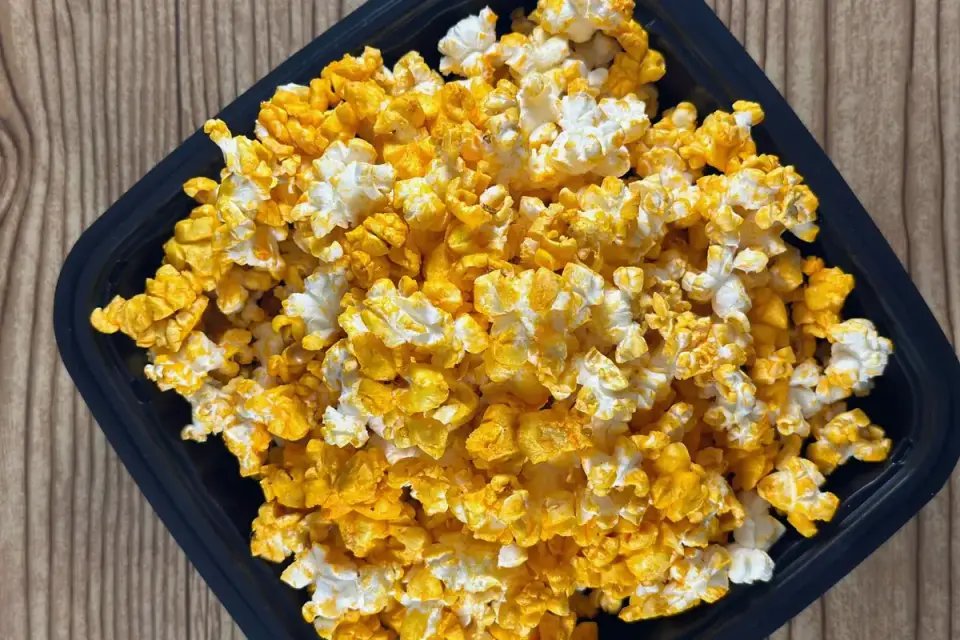
A short paragraph here, because this part deserves its own line: read the ingredient list on any flavored popcorn before a single piece leaves the bowl.
The kernel problem nobody thinks about until it happens
Here’s where I get decisive, because I think this is the part owners underrate. Unpopped and partially popped kernels are small, dense, and shaped in a way that makes them easy to swallow whole and hard to chew cleanly. That combination is a genuine choking risk, and in a dog that gulps rather than chews, an intestinal blockage risk too. Kernels lodged between teeth also contribute to the kind of low-grade dental irritation that builds toward gum disease over months, not days. If the same logic sounds familiar, it’s the same shape-and-swallow risk I’d flag with certain nuts, small, hard, easy to bolt, hard to digest. My rule for clients: pick through the bowl, or better, skip sharing the bottom of it where unpopped kernels collect.
What a sensitive gut has to say about popcorn
I think about this one through a digestive-health lens as much as a toxicology one. Fiber generally supports gut function, which is part of why so many owners reach for fiber-forward treats in the first place. But popcorn’s fiber is coarse and comes attached to a hull that can irritate a sensitive digestive tract rather than settle it. Dogs already managing exocrine pancreatic insufficiency, a condition typically addressed through pancreatic enzyme replacement therapy and nutritional management with low-residue diets, according to a review in the Journal of the American Veterinary Medical Association, don’t need an unpredictable fiber source added to that picture. And research on probiotic supplementation in dogs, including a randomized trial reported in Frontiers in Veterinary Science, found that diversity metrics did not distinguish responders from non-responders, a reminder that gut response to any new food, popcorn included, varies more between individual dogs than most owners expect. If your dog already gets gassy or loose on a fiber-rich diet, popcorn is not the fiber source to test that theory on. A gentler option, like the fiber discussed in our sweet potato guide, tends to sit better.
When popcorn crosses into an emergency
A dog vomiting once after stealing a few plain kernels off the floor is rarely a crisis. A dog who ate a garlic-and-herb popcorn seasoning, who’s suddenly lethargic, pale-gummed, or straining to pass anything, needs a call to your vet the same day, the same red flags I’d want ruled out before assuming it’s just popcorn. If seasoning is involved, the concern mirrors what I’d say about garlic exposure generally: small amounts add up, and the toxicity isn’t dose-proportional in the forgiving way owners hope.
So what’s the actual verdict on movie night
Plain, fully popped, unbuttered, unsalted popcorn, given a few pieces at a time, is a reasonable treat for most healthy dogs, according to guidance from the American Kennel Club. It’s not a food they need, and it’s not one I’d build a habit around, but it’s also not one I’d panic over. The kernels, the butter, the salt, and especially the seasoning are where the real decisions live. Read the bowl the way you’d read a chart: what’s actually in it, and what does this particular dog tend to do with new textures. That’s the whole answer, and it holds up whether the movie is good or not.
Frequently asked questions
Can dogs eat plain popcorn?
Yes, in small amounts. Fully popped, unsalted, unbuttered popcorn is the version most vets consider a reasonable occasional treat for a healthy dog.
Is movie theater butter popcorn bad for dogs?
It's not the popcorn itself so much as the fat and salt load. Buttered, salted popcorn can trigger GI upset and, in dogs prone to it, contributes to the kind of fatty-meal stress associated with pancreatitis.
Are unpopped popcorn kernels dangerous for dogs?
Yes. Whole or partially popped kernels are hard, small, and easy to swallow without chewing, which makes them a real choking and intestinal-blockage risk, particularly for small-breed dogs.
Can dogs eat caramel corn or cheese popcorn?
No. The added sugar, fat, and often garlic or onion powder in flavored popcorn outweigh whatever benefit the popcorn itself offers.
How much popcorn can I give my dog?
A few plain, fully popped pieces as an occasional treat is a sensible ceiling for most dogs. Any dog with a history of pancreatitis, GI sensitivity, or dental disease should skip it or check with their own vet first.
Sources
- Can Dogs Eat Popcorn? — American Kennel Club
- Exocrine pancreatic insufficiency: treatment and management considerations — Journal of the American Veterinary Medical Association
- Probiotic response variability and gut microbiota diversity in dogs — Frontiers in Veterinary Science