
On this page
The last dog I watched work through a bowl of blueberries was a stout, gray-muzzled beagle mix on a porch in late summer, methodically nosing each berry off a paper towel before crunching it with the deliberate satisfaction of a dog who has never once been rushed. His owner had read three conflicting things online that week — that blueberries were a superfood, that fruit was empty sugar, that dogs shouldn’t have anything humans eat — and she wanted a straight answer before the next bag went in the fridge. That tension between internet extremes and an actual dog eating an actual snack is where most feeding questions live, and blueberries are a good one to settle plainly.
What actually happens when a dog eats a blueberry
Nothing dramatic, in the overwhelming majority of cases. Blueberries aren’t on the short list of fruits that cause acute toxicity in dogs — that list belongs to grapes, raisins, and a few others entirely. A dog who eats a stray blueberry off the kitchen floor is not a household emergency. What blueberries bring to a dog’s bowl is modest and specific: fiber, vitamin C, a little vitamin K, and a family of plant pigments called anthocyanins, the same compounds that give the berry its color. The American Kennel Club notes that these are linked to antioxidant activity that may help offset everyday cellular wear, which is a reasonable, bounded claim — not a promise that a handful of berries changes a dog’s health trajectory.
The nutrition case, without overselling it
Here’s where I want to be careful, because it’s easy to let a nutritious-sounding ingredient turn into a nutritional promise it can’t keep. Fiber is a familiar structure/function ally for gut health in dogs, and blueberries contribute a modest amount of it alongside water content and a light calorie load. PetMD and other sources present both the benefits and practical risks. Anthocyanins get more excitement in headlines than the current dog-specific evidence fully supports; most of the strongest antioxidant data comes from human and in-vitro research, and I’d rather an owner understand that gap than assume blueberries are doing more silent work than they are.
That’s not a reason to skip them. It’s a reason to treat blueberries as what they are: a low-calorie, whole-food treat that beats a lot of the alternatives in the cabinet, without needing to be dressed up as medicine.
Where the math actually gets in the way
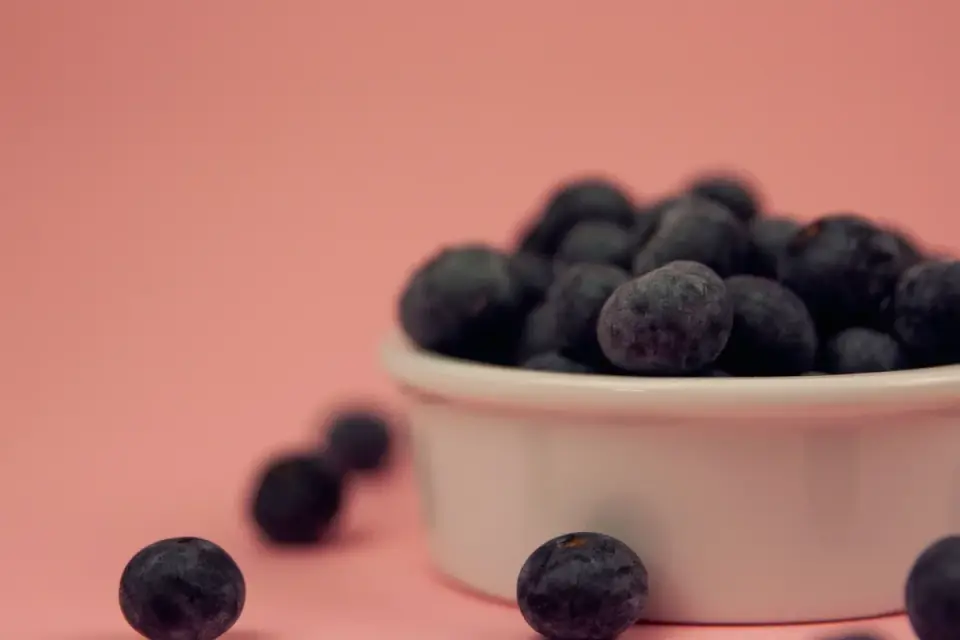
Sugar and volume, mostly — not the berry itself. A cup of blueberries carries real natural sugar, and dogs process sugar less efficiently than people assume, so portion matters more than the ingredient list. Small dogs get into trouble faster than large dogs simply because the same ten berries represent a much bigger share of their daily calories. And whole berries are a legitimate choking risk for small-mouthed dogs and enthusiastic gulpers alike, which is one more argument for mashing or halving them for toy breeds and puppies rather than tossing them across the kitchen like popcorn.
I think about a client’s diabetic senior spaniel here. Her owner loved the idea of a fruit treat that felt healthier than commercial biscuits, and blueberries genuinely are a better sugar profile than most bagged treats. But “better than a biscuit” isn’t the same as “safe to free-feed,” and a dog on insulin needs consistent, vet-coordinated carbohydrate intake, not a fluctuating handful of fruit added on instinct. That’s the kind of dog where the fruit itself is fine in principle, but the amount and timing need a professional’s eye, not a guess.
Dogs who need a smaller handful, or none at all
Most healthy adult dogs tolerate a modest daily serving without issue. A few groups warrant more caution. Dogs with diagnosed diabetes need carbohydrate intake managed deliberately, not layered on ad hoc. Dogs with a history of pancreatitis or exocrine pancreatic insufficiency are often on tightly managed, low-residue diets, and the Journal of the American Veterinary Medical Association’s review of EPI management notes that treatment centers on “pancreatic enzyme replacement therapy, nutritional management (low-residue diets with moderate fat content), and supplementation of cobalamin” — a regimen where adding fibrous fruit isn’t automatically harmless and deserves a direct conversation with the treating vet. Dogs with a known sensitive stomach may simply do better skipping fruit treats altogether, blueberries included.
If your dog is transitioning foods for another reason entirely — moving a senior dog to a new formula, for instance — that’s also a moment to hold off on new treats like blueberries until the gut settles; our step-by-step senior food transition guide walks through the timing. And if blueberries have you rethinking what other produce is safe, our guide to feeding sweet potato and our rundown of which nuts are toxic to dogs cover two of the most common follow-up questions we hear.
How many is actually the right amount
Use body size as the anchor, not enthusiasm. A small dog under roughly 20 pounds does well with two or three berries. A medium dog in the 20-to-50-pound range can handle four to six. A large dog over 50 pounds can take a small handful, somewhere around eight to ten. Keep total treats, blueberries included, under about 10% of daily calories, and serve them plain — rinsed, unsweetened, never canned in syrup, never as a blueberry muffin or a yogurt-dipped snack, since those carry added sugar and sometimes xylitol that has nothing to do with the fruit’s actual merits.
A single short rule holds up better than a long list: treat blueberries as a genuinely decent low-calorie snack, size the portion to the dog in front of you, and let your vet weigh in if that dog has a condition — diabetes, pancreatitis, EPI — where fruit isn’t a neutral add. Grounded that way, in what the fiber and antioxidant content can and can’t do rather than what a headline promises, blueberries earn their spot in the treat jar without needing to be oversold.
Frequently asked questions
Can puppies eat blueberries?
Small amounts are generally fine once a puppy is eating solid food, but a puppy's stomach is easier to upset than an adult dog's, so start with one or two mashed berries and watch for loose stool before making them a regular treat.
Are frozen blueberries safe for dogs?
Yes, plain frozen blueberries with nothing added are a fine option, and some owners use them as a cool-weather chew for warm days. Very small or toothy dogs should still get them slightly thawed to reduce any bite-down risk.
Can dogs eat blueberry muffins, yogurt, or pie filling?
Not as a rule. Those products carry added sugar, fat, and sometimes xylitol, and the blueberry content is usually a small fraction of the recipe, so the benefit doesn't offset the risk.
How many blueberries can a dog eat in a day?
A rough starting point is a couple of berries for a small dog, four to six for a medium dog, and up to a small handful for a large dog, kept within the general rule that treats stay under about 10% of daily calories.
Sources
- Can Dogs Eat Blueberries? Are Blueberries Good For Dogs? — American Kennel Club
- Can Dogs Eat Blueberries? Benefits and Risks — PetMD
- Exocrine pancreatic insufficiency in dogs: nutritional management — Journal of the American Veterinary Medical Association