On this page
A veterinary technician I worked with used to say you could tell a lot about a muzzle by watching a dog’s tongue. If the tongue was out and the dog was panting normally, the muzzle was doing its job and staying out of the way. If the tongue was pinned shut, something was wrong, and it usually meant someone had grabbed the wrong tool for the situation.
That’s really the whole question behind basket muzzle vs fabric muzzle. They’re not two versions of the same product. They’re built for different jobs, and mixing them up is where most of the trouble starts.
What each muzzle is actually built to do
A basket muzzle is a rigid, cage-like structure, usually molded plastic, silicone, leather, or wire, that surrounds the dog’s snout without closing over the mouth. According to Muzzle Choices: Cornell University College of Veterinary Medicine, dogs “can pant normally in a basket muzzle, drink water, and eat treats,” because the openings in the sides and front leave room for the jaw to move and the tongue to do its work. That’s what makes a basket muzzle appropriate for longer stretches of wear: a walk, a vet visit, a busy trailhead, a grooming session that runs long.
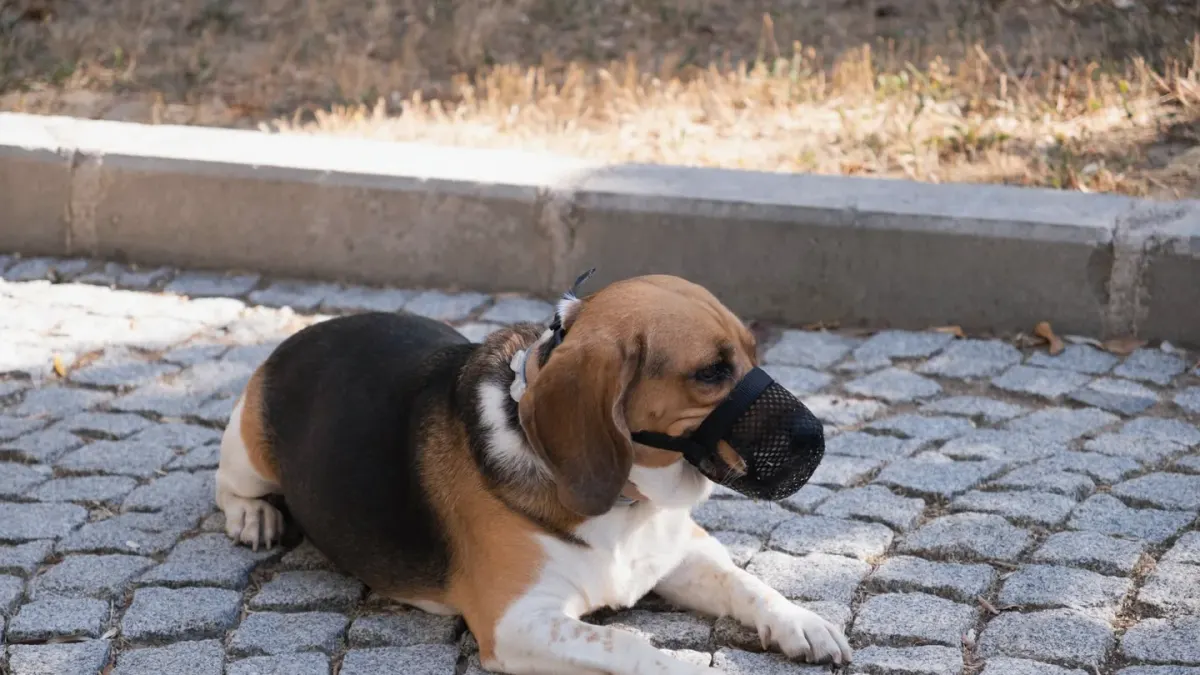
A fabric or sleeve muzzle is the opposite design idea. It’s a snug wrap of nylon, mesh, or leather that holds the jaws closed. Cornell’s comparison is blunt about the tradeoff: fabric muzzles “limit panting and drinking. Dogs may still nip.” They’re built for a task that takes a minute or two, like a nail trim, a quick exam, or an injection, not for anything longer.
Why the panting difference isn’t a minor detail
Dogs don’t cool themselves through sweat glands the way people do. Panting is their main heat-release valve, and a muzzle that clamps the mouth shut removes that valve at exactly the moments — exercise, stress, a warm exam room, a car ride — when a dog needs it most. That’s why the “a few minutes only” guidance around fabric muzzles isn’t just a suggestion; it’s tied to how dogs actually regulate body temperature. Brachycephalic breeds, who already work harder to move air, have even less margin for a muzzle that restricts jaw movement.
Short version: if a dog can’t fully open its mouth and pant, the clock is already running on how long that muzzle should stay on.
A fitting that told me more than the chart did
In my practice, I once fitted a muzzle for a middle-aged pit-mix named Otis, brought in by a foster family who wanted a calmer walk in a crowded dog park. He was about 55 pounds, food-motivated, and mildly reactive to other dogs on-leash — nothing dramatic, just a hard stare and a stiff body that made his foster mom nervous. She’d bought a soft fabric muzzle online because it looked less intimidating in the product photos. Within five minutes at the park on a mild October afternoon, he was pawing at his face and drooling heavily, and she called the clinic that evening worried something was medically wrong. Nothing was; the muzzle was simply doing what a fabric muzzle does, holding his jaw shut during a 45-minute walk it was never designed for. We switched her to a hard-sided basket muzzle sized to let him fully open his mouth, then started reward-based conditioning at home before the next outing. The pawing and lip-licking she’d described dropped off within about two weeks of short, positive sessions before every walk.
Matching the muzzle to the actual situation
The honest answer to “which one should I buy” depends on what you’re doing, not on which one looks friendlier:
- Walks, hikes, dog parks, boarding, or any outing lasting more than a few minutes — a basket muzzle. It’s the only category built for sustained wear where a dog still needs to pant and drink.
- A quick nail trim, a blood draw, or brief restraint at the groomer — a fabric muzzle can work, but the clock matters. Keep it short and remove it as soon as the task is done.
- A dog with a short or brachycephalic muzzle — lean toward basket styles even for short tasks, since these dogs have less airway margin to begin with; ask your vet about a shape that actually fits their face.
- A reactive or fearful dog who needs a muzzle regularly — invest in a basket muzzle and build a real conditioning routine, instead of treating the muzzle as an emergency-only tool.

Fit matters as much as the type
Even the right muzzle type fails a dog if it’s fitted wrong. A basket muzzle that’s too small pinches the sides of the mouth and still blocks a full pant. One that’s too loose lets a dog work a paw underneath and pull it off, or worse, still manage a nip through gaps that shouldn’t be there. Cornell’s basket muzzle training guidance walks through introducing the muzzle gradually so the dog associates it with something good, rather than something to endure — and fit is part of that first impression. A muzzle that pinches or gaps teaches a dog to fight it every single time.
Fear Free Happy Homes frames this the same way trainers do: introduce the muzzle before it’s needed for something stressful, not during it. Pairing the muzzle with treats and short, low-pressure sessions well before a vet visit or a busy trail means the dog isn’t learning “muzzle equals scary thing” at the exact moment everyone needs them calm.
This training approach matters regardless of which harness or collar setup a dog wears on the same outing. If you’re also sorting out a front-clip vs back-clip harness for a reactive or pulling dog, treat the muzzle and the harness as two separate decisions worth getting right independently — a well-fitted harness doesn’t fix a poorly fitted muzzle, and vice versa. The same goes for a GPS tracker for an escape-prone dog: useful gear for a specific risk, but not a substitute for muzzle conditioning if reactivity is the actual concern.
What I’d tell a client standing in the aisle
I’ve watched owners agonize over which muzzle looks less scary to strangers, and I understand the instinct. But the decision that actually protects a dog is duration and airflow, not appearance. A basket muzzle that lets a dog pant and drink is the safer default for anything beyond a couple of minutes. A fabric muzzle has a real, narrow use case — brief, supervised, done — and it stops being appropriate the moment a dog needs to cool down or hydrate.
Individual dogs vary in face shape, temperament, and how quickly they accept a new piece of gear on their head, so take the time to measure your dog’s snout length and width before ordering, and introduce whichever muzzle you choose slowly, with treats, well before you actually need it.
Bottom line
For anything longer than a couple of controlled minutes, choose a basket muzzle sized to let your dog pant and drink normally; reserve fabric muzzles for brief, supervised tasks only, and always introduce either one with positive conditioning before you need it for real.
Frequently asked questions
Can a dog wear a fabric muzzle on a walk?
It's not recommended for anything beyond a couple of minutes. Fabric muzzles hold the jaw closed and limit panting and drinking, which becomes a real problem during exercise or warm weather. A basket muzzle is the better fit for walks.
How do I know if a basket muzzle fits correctly?
Your dog should be able to open its mouth fully, pant, drink water, and take small treats through the front or sides. It shouldn't rub the nose raw or allow a paw to slip underneath and pull it off.
Is muzzle training necessary if my dog has never bitten anyone?
Many trainers and veterinary behavior resources recommend proactive muzzle conditioning for any dog, since it makes emergencies, vet visits, and grooming safer and less stressful when a muzzle is genuinely needed.
Sources
- Muzzle Choices — Cornell University College of Veterinary Medicine
- Basket Muzzle Training — Cornell University College of Veterinary Medicine
- Dog Meets Muzzle: How to Make the Introduction — Fear Free Happy Homes