
On this page
- The Dog In Front Of You Versus The Dog In The Photos
- Build, Tail, and Ears: The Physical Differences That Hold Up
- Two Breeds, Two Different Genetic Conversations
- Temperament: Same Herding Instinct, Slightly Different Delivery
- Fitting Either Breed Into an Actual Household
- Choosing Between Them, and Why I Usually Ask One More Question
Quick answer, if you’re standing in a breeder’s yard right now: count the tail, check the ears, and ask about degenerative myelopathy testing before you ask about coat color.
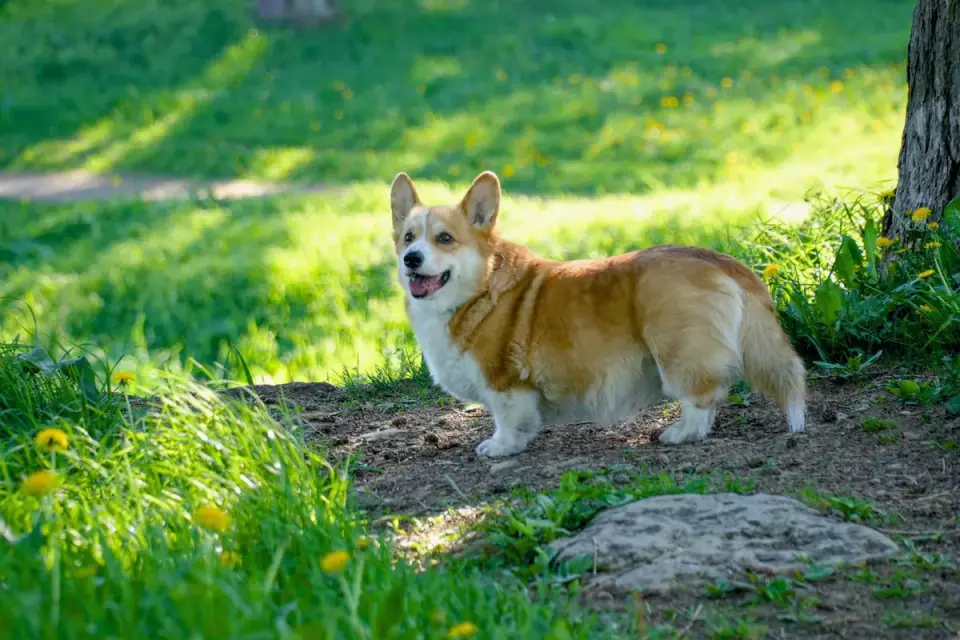
- Tail — Pembrokes are naturally bobtailed or docked short; Cardigans keep a long, fox-brush tail. This is the fastest tell at a glance.
- Bone and weight — Cardigans run heavier and longer-bodied, up to 38 pounds for males versus a Pembroke’s 30-pound ceiling.
- Ears — Pembroke ears are more rounded and set closer together; Cardigan ears are larger, more rounded at the tip, and set wider.
- Health screening priority — Pembrokes carry a much higher rate of the SOD1 mutation linked to degenerative myelopathy; both breeds need hip and eye clearances.
- Origin — Cardigans arrived in Wales roughly a thousand years earlier and share ancestry with dachshund-type dogs; Pembrokes came later, likely with Flemish weavers.
- Everyday fit — both breeds want a job, tolerate apartments better than their herding instincts suggest, and shed hard twice a year regardless of which one you pick.
That’s the skeleton. Here’s what actually sits on it, and where I’d steer a family who can’t decide between the two.
The Dog In Front Of You Versus The Dog In The Photos
I had a family in my exam room a few years back with an eleven-week-old corgi puppy they’d bought sight unseen from a breeder two states away, convinced they’d gotten a Pembroke because that’s what the listing said. The puppy had a full, brushy tail already curling over her back. Nothing about her ears, her length of body, or her forty-pound projected adult weight matched what they’d read about Pembrokes online. She was a Cardigan, almost certainly, and a beautifully put-together one. The owners weren’t upset once I explained it, but they had planned around the wrong breed’s exercise needs and the wrong breed’s genetic testing panel. That mismatch is more common than people expect, because both dogs get lumped together as “corgi” in casual conversation and even in some shelter paperwork.
Build, Tail, and Ears: The Physical Differences That Hold Up
The two breeds are not the same dog with different tails bolted on, even though that’s how people talk about them. Per the Official Standard of the Pembroke Welsh Corgi, a male Pembroke stands 10 to 12 inches at the withers and should not exceed 30 pounds, with the preferred show weight closer to 27 pounds. The body is meant to read as moderately long and low, not exaggeratedly so.
Cardigans are built on a longer chassis. The Official Standard of the Cardigan Welsh Corgi puts males at 30 to 38 pounds and females at 25 to 34 pounds, with an overall silhouette described as long in proportion to height. The tail is the detail most owners already know: Cardigans keep a full, fox-like brush tail, while Pembrokes are docked short or born with a natural bobtail no more than two inches long. Ear shape is the second tell once you know to look — Cardigan ears are proportionally larger and more rounded at the tip, set wider on the skull, while Pembroke ears sit closer together and come to a slightly sharper point.
None of this is cosmetic trivia. A longer spine on a heavier-boned dog changes how I think about jumping habits, ramp use, and disc health as that dog ages, which is a conversation I have differently with Cardigan owners than with Pembroke owners.
Two Breeds, Two Different Genetic Conversations
This is where I get the most pointed questions, and where I try to be direct rather than vague. Degenerative myelopathy is a late-onset spinal cord disease, usually surfacing around eight to ten years of age, that starts as hind-limb incoordination and can progress toward paralysis over roughly six months to two years. It’s tied to a mutation in the SOD1 gene, and it shows up disproportionately in Pembrokes. According to the Pembroke Welsh Corgi Club of America, genetic testing surveys have found roughly half the breed tests homozygous “at risk” for the SOD1 mutation, with a large share of the remainder carrying one copy. Testing for this variant is available through several labs, and the OFA also tracks a risk-modifier test that helps explain why some at-risk dogs never develop clinical signs. I tell Pembroke owners plainly: a homozygous “at risk” result is not a diagnosis, and plenty of those dogs live full lives without ever showing symptoms, but it’s information worth having before you breed or before you’re blindsided at age nine by a stumble that isn’t just “getting old.”
Cardigans are not free of orthopedic and spinal concerns given their long-backed build, but the SOD1 prevalence data specific to Pembrokes is the sharper, better-documented distinction between the two breeds right now. Both should have hip evaluations and eye exams as part of any responsible breeding program, and I’d ask to see documentation for either breed before committing to a puppy.
Temperament: Same Herding Instinct, Slightly Different Delivery
Owners describe Pembrokes as the more outgoing, chattier of the two, quicker to insert themselves into whatever the household is doing. Cardigans get described more often as reserved with strangers, a touch more independent, and just as devoted once they’ve decided you’re theirs. I’d hold both of those loosely. I’ve met bold Cardigans and standoffish Pembrokes, and litter-to-litter variation inside either breed can outweigh the breed-level trend. What holds true across almost every corgi I’ve examined, regardless of which side of the family tree they’re on, is the herding brain: nipping at heels, tracking movement across a room, and a low tolerance for boredom that turns into barking or chewing if it isn’t channeled into a job.
Fitting Either Breed Into an Actual Household
Neither breed needs acreage, and both do reasonably well in smaller homes if the exercise math is honored — that’s a fit conversation similar to the one we walk through in our guide to apartment living breeds. Coat care is nearly identical between the two: a double coat that sheds year-round and then sheds harder, twice a year, in a way that surprises first-time owners. If shedding is the dealbreaker for your household, this isn’t the pairing to compare — our hypoallergenic breed guide covers options that actually fit that constraint.
Where the two breeds diverge again is body maintenance as they age. The Cardigan’s longer spine and heavier frame put a bit more emphasis on keeping excess weight off and limiting repeated jumping onto furniture, similar to the conversation I have with owners of longer-backed breeds generally — the same logic that shows up when comparing Border Collies and Australian Shepherds on structural risk. Pembrokes, being lighter and shorter-coupled, tend to tolerate stairs and jumping a little better, though “better” here is relative, not a green light.
Choosing Between Them, and Why I Usually Ask One More Question
I don’t have a universal favorite between these two, and I’d be lying if I pretended otherwise. What I do have is a follow-up question I ask nearly every family who’s torn: are you choosing based on the tail, or based on the dog’s actual size and energy output? Because that’s usually where the real answer lives. A family drawn to the Pembroke’s tidier frame and slightly lower weight ceiling is often, without realizing it, also choosing the breed with the better-documented — if sobering — SOD1 testing data available to them before they commit. A family that’s fine with a longer-bodied, heavier dog and wants a slightly more independent temperament often does well with a Cardigan, provided they’re realistic about joint and spine maintenance from puppyhood on.
I had a couple in clinic last spring debating exactly this, standing in my exam room with two rescue applications half-filled-out, one for each breed. I asked them to weigh the dog with the tail, or weigh the dog with the sharper price tag on future testing. They picked the Cardigan, mostly because their apartment building had a strict weight cap that the Pembroke’s lighter frame cleared more comfortably — which is its own reminder that the “right” corgi is rarely about which one looks cuter in a photo. It’s about which set of tradeoffs your household can actually carry for the next dozen-plus years.
Both are working dogs at heart, bred to move cattle by nipping at heels low to the ground, and both will ask you to give that instinct somewhere to go. If you can do that, and you’re honest with yourself about the size, coat, and testing differences above, either breed rewards the effort.
Frequently asked questions
Can a Pembroke and Cardigan Welsh Corgi be bred together?
They're recognized as two separate breeds by the AKC, not variants of one breed, so responsible breeders keep the lines separate and register litters accordingly.
Which corgi breed is better for a first-time dog owner?
Either can work for a first-time owner willing to commit to daily exercise and consistent training; the Pembroke's smaller size and lighter weight ceiling make it slightly easier to manage physically for some households.
Do both Welsh Corgi breeds need degenerative myelopathy testing?
Testing is most strongly recommended for Pembrokes given the documented prevalence of the SOD1 mutation in that breed; ask any breeder, of either breed, for current health clearances.
Sources
- Official Standard of the Pembroke Welsh Corgi — American Kennel Club
- Official Standard of the Cardigan Welsh Corgi — American Kennel Club
- Canine Degenerative Myelopathy and Genetic Testing in PWCs — Pembroke Welsh Corgi Club of America
- Degenerative Myelopathy Risk Modifier (DMRM) — OFA