On this page
Last October, a couple with a three-year-old, 48-pound Lab mix came in frustrated about evenings. Their dog held a crisp sit, down, and recall at noon in the backyard, yet at 9 p.m. on the same patio he stared blankly and wandered off. They worried he was being stubborn after dark. My expectation first was different: he had learned a visual picture, not a word. In daylight he watched their shoulders, hand lift, and step toward him. Once that picture faded, the behavior faded with it. We needed to make the main decision concrete right there — keep repeating a daylight hand signal louder and larger, or rebuild the cue around what still works at night.
Dogs are built for dim light, just not for detail. The American Kennel Club notes that dogs see better than people in low light but rely more on motion and contrast than sharp edges, which explains why a subtle hand cue washes out on a dark porch. My bias is clear: I prioritize a clean verbal cue paired with a distinct sound or touch target over trying to light up the yard like a stadium. Training that leans on reward-based clarity holds up across contexts, a position consistent with the guidance from the American Veterinary Society of Animal Behavior on humane training methods. The best reason to choose differently is speed. A flashlight or porch light keeps the old visual cue working tonight. I still land on retraining because batteries die and walks move.
Why Your Daylight Cue Vanishes After Sunset
Most owners accidentally train a body prompt. You say “down” while bending, luring, stepping forward, or staring at the ground. The dog learns the whole package. Take away light and you take away the loudest part of the package. Add night sounds, cooler scents, raccoons under the deck, and a tired owner mumbling, and latency doubles.
Start inside with lights on. Say the word once, pause a full two seconds, then add the smallest hand help only if needed. Reward within one second of the correct movement. When the dog responds to voice alone eight times out of ten, you have something worth taking into the dark.
Trade Light For Sound And Touch
Pick one verbal cue and freeze it. Same word, same tone, same volume. “Come” cannot sometimes be “come here, come on, this way.” Add a second channel the dog can follow without eyes. A tongue click, a short whistle pattern, or two taps on your thigh gives direction. For close work, a tactile target helps: palm touch for sit-front, shin tap for heel position, mat with a different texture for place.
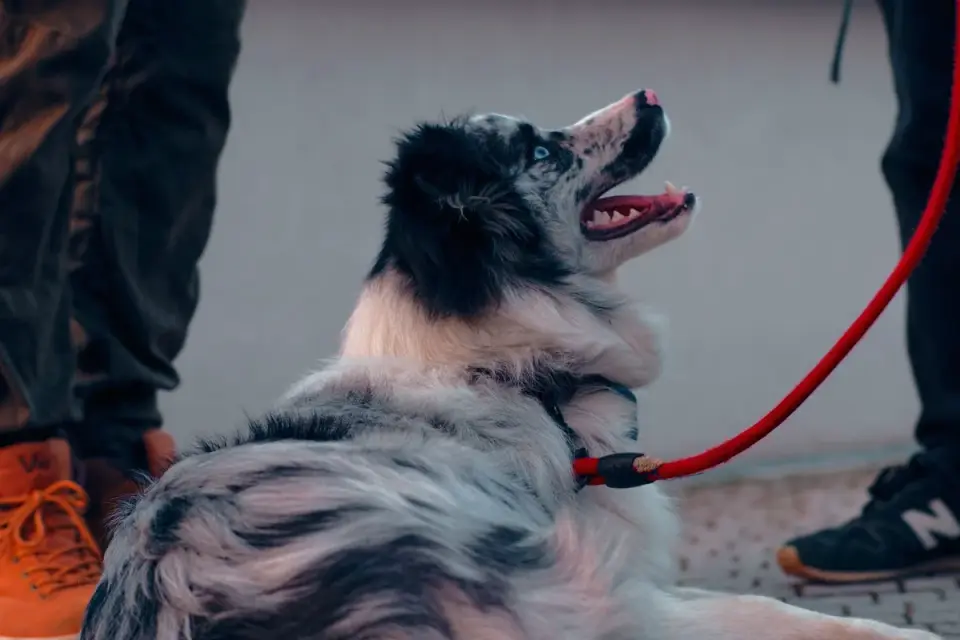
Practice the transfer in daylight first. Say “touch,” present your palm six inches from the nose, mark and reward the nose bump. Then fade the visual present until your open hand stays at your side and voice alone triggers the search. That is the bridge you will use outside.
The middle failure I see looks like this. A retiree with a five-month-old beagle puppy tried to force nighttime recalls across an open field for six straight evenings, calling louder and flashing a phone light in the dog’s face each time he lagged. By night four the puppy ran to about 30 feet, then veered to sniff and stopped checking in at all, and the owner added a long-line pop out of frustration. The tradeoff was stark: pressure bought one faster return, then cost three willing ones. We scrapped the field, moved to a 12-foot hallway with lights dimmed, and rebuilt recall as a running game between two people with high-value treats for two minutes at a time.
Keep sessions short enough to stay sharp. For ideas on pacing without frying attention, see How Long Should a Training Session Be to Tire the Brain?.
A Simple Night-Proofing Plan That Holds
Proofing means changing one variable at a time while success stays high.
Begin in a dim hallway, not the backyard. Run five repetitions of one cue, reward four out of five correct responses, then stop. Next night, add one distraction: a TV on, a treat bag rustling in another room, a family member walking past. Then move to the porch with a low light, then to the yard with the same low light, then to a darker corner of the yard.
Reward generously at first. Night work is harder, so pay like it is harder.
Vary your position. Stand, sit in a chair, face sideways. Dogs that only down when you face them have not learned down.
That plan bends in real life. An owner with an 11-year-old, 19-pound miniature poodle with cloudy eyes and new night anxiety found the hallway game backfired. After three nights of practice she still paced and panted by 8 p.m., and her sit latency stretched past six seconds when the overhead light went off. We changed the advice completely for her. No fading light yet. We kept a warm lamp on, added a ribbed rubber mat as a foot target she could feel, switched to a soft, low verbal cue instead of a whistle, and did only three repetitions before a sniff break. Individual dogs vary widely, and for seniors comfort has to come before criteria.
If your dog shuts down, barks more, or needs much firmer handling at night, pause and check baseline health, vision, and stress with your own vet before pushing training.
What I Tell Owners To Keep
Night reliability is not stubbornness.
It is a cue stripped of its visual scaffolding.
Rebuild it once around voice, sound, and touch and you keep it everywhere.
For help choosing where to do that rebuilding work, compare Group Classes vs. Private vs. Online Dog Training: What Actually Fits Your Dog’s Stage.
Frequently asked questions
Why does my dog only listen when he can see my hand?
He likely learned the hand and body motion as the real cue and the word as background noise. Retrain by saying the word first, waiting two seconds, then helping only if needed until voice alone works.
Should I use a flashlight to train at night?
A dim porch light for safety is fine, but avoid shining light in the eyes or using the beam as the cue. Build a verbal plus sound or touch cue so behavior holds when you have no light.
How many repetitions should I do in the dark?
Keep it brief, about three to five clean repetitions of one cue, then play or sniff. End while your dog still wants more rather than drilling until focus fades.
Sources
- Position Statements — American Veterinary Society of Animal Behavior