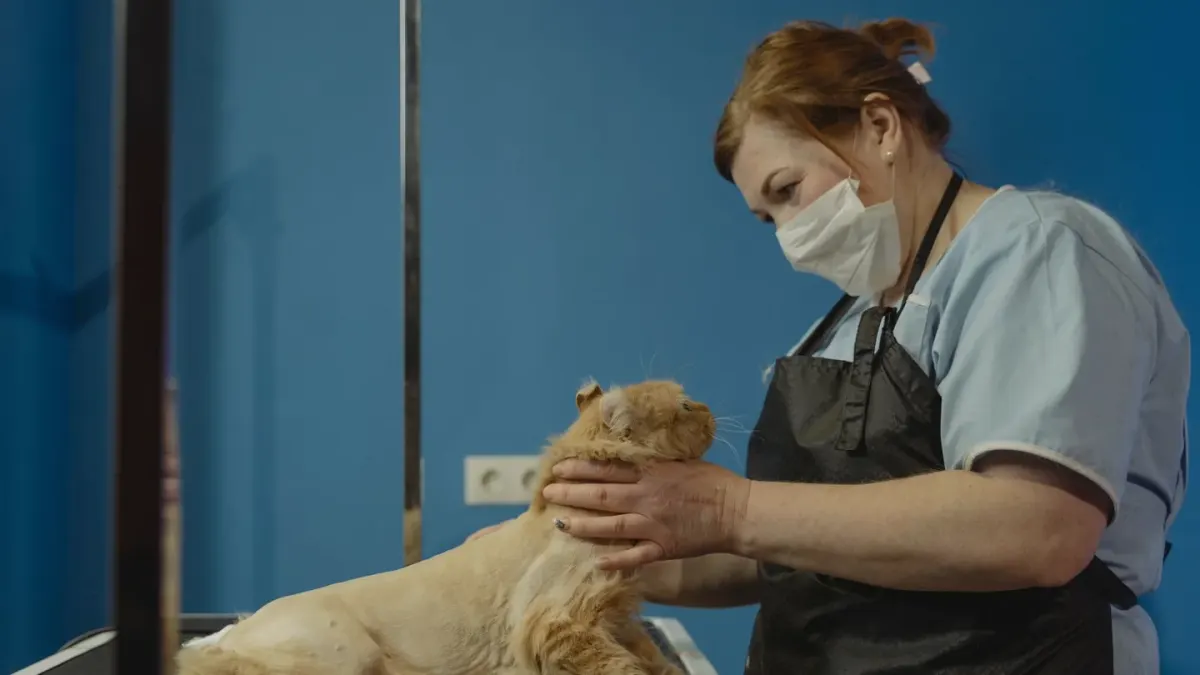
Last spring a 3-year-old 72-pound Husky mix came in for a routine spring check with a tail that looked full but felt tight at the base, like felt under velvet. The owner said brushing took 25 minutes every Sunday and still left tufts floating around the apartment by Wednesday. We parted the coat behind the ears and over the hips and found flat, grayish mats about a half-inch thick hugging the skin, the kind a short, stiff slicker just skips over. That gap between what the topcoat shows and what the undercoat holds is exactly what choosing a slicker for a thick coat has to solve, and it starts with reach, not branding.
What a thick coat actually asks from a slicker
A thick double coat is two coats in one. Long guard hairs shed water and dirt, while soft undercoat traps air and sheds seasonally. A slicker supports home care by lifting loose undercoat and preventing those early tangles from felting down, which may help maintain skin airflow between baths. A common question is whether a bigger head means faster grooming. In day-to-day practice, fit matters more than size.
Look for pins long enough to reach through density without scratching, with slightly angled tips and a flexible cushion that gives when you meet resistance. That flex is your safety margin. The American Kennel Club notes that slickers are commonly used to remove tangles and loose hair, with technique and coat type guiding the choice. Short, rigid pins on a dense Chow or Samoyed tend to glide over the top and burnish mats underneath.
Pressure matters more than force.
Pin length, flex, and handle work as a system
I steer most owners of thick-coated breeds toward a medium to large rectangular head with medium-length, fine-to-medium pins on a well-cushioned pad, plus a handle that keeps the wrist neutral. That combination supports steady line-brushing: lift a section, brush from skin outward in short strokes, then check with a comb. If the comb snags, the slicker pass is not done. For background on splitting tools by job, see Slicker Brush vs Undercoat Rake: Which Do You Need.
The tradeoff shows up fast. One owner with a 5-year-old 54-pound Standard Poodle mix bought an extra-firm slicker with uncoated pins to power through 6 weeks of missed brushing. After four nightly 15-minute sessions the top looked smooth, but the dog flinched over the shoulders and we found pink, streaky brush burn under the chest mats. Stiff, sharp pins had scraped skin while the dense felt stayed anchored. We set that brush aside, softened technique to daily 5-minute sections with a cushioned slicker, and finished tight spots with a comb and a professional trim. Speed had cost comfort and missed the actual mat.
Coated or ball-tipped pins feel gentler at first, yet on very dense coats they can drag and pull. I still land on uncoated pins with polished, slightly bent tips and real cushion give for most thick coats, used lightly. The evidence for any single pin coating preventing skin irritation is thin, so technique carries the result: light pressure, flat pad angle, frequent checks, and treats for calm cooperation. If bathing frequency is part of the matting cycle, this guide on How Often Should You Bathe Your Dog? A Vet’s Guide by Coat and Skin Type helps match wash schedule to skin type.
When the usual slicker routine has to bend
Not every thick coat tolerates textbook line-brushing. An 11-year-old 61-pound Shepherd mix with stiff hips could only stand comfortably for about 8 minutes, and lying on her side for a full groom was no longer realistic. Her owner worried about skipping care during a 3-week arthritis flare. We changed the plan rather than forcing it: two brief standing sessions a day, just neck ruff one morning and tail and britches the next, using a smaller slicker head for better control around joints and a comb to test, not to yank. We also booked shorter, more frequent professional help and reviewed the split in At-Home Grooming vs a Professional Groomer: How to Split the Job. Individual dogs vary widely in temperament and tolerance, and senior comfort comes first.
A practical test before you buy: press the slicker on the back of your forearm. It should feel scratchy but not sharp, and the pad should depress evenly. In the aisle, check pin spacing, pad flex, handle weight, and whether replacement heads are available. Skip gimmicks like spray-mist handles for thick coats; they do not replace sectioning. The ASPCA reminds owners to work gently and watch for skin sensitivity during routine grooming, which lines up with what I see in preventive visits.
My position is simple. Buy for reach and forgiveness — adequate pin length, true cushion flex, and a handle you can hold loosely — then let light, systematic technique do the work. The best reason to choose differently is a dog that finds the standard slicker aversive despite good handling; there a softer finishing brush plus professional de-shedding may maintain comfort better than the theoretically correct tool. Even then, I still land where daily practice lands me: a well-fitted slicker, used in small sections, prevents more mats with less stress than any aggressive alternative.
Frequently asked questions
How do I know if the slicker pins are long enough for a thick coat?
Part the coat and look at depth to skin. Pins should reach through loose undercoat to the base without pressing hard. If a comb still snags after light slicker strokes, you need more reach, better sectioning, or help with a mat — not more pressure.
Should I use a slicker every day on a thick-coated dog?
Short, calm sessions a few times per week support most thick coats, with daily checks during seasonal shedding. Keep strokes light and brief, reward settled behavior, and stop if skin looks pink or the dog moves away.
Can a slicker remove tight mats on a Husky or Chow?
A slicker supports early tangles and loose hair, but tight felt near skin usually needs a comb-assisted plan or a professional groomer. Do not pull or cut mats at home with scissors against skin.
Sources
- Dog Grooming Tips — ASPCA