On this page
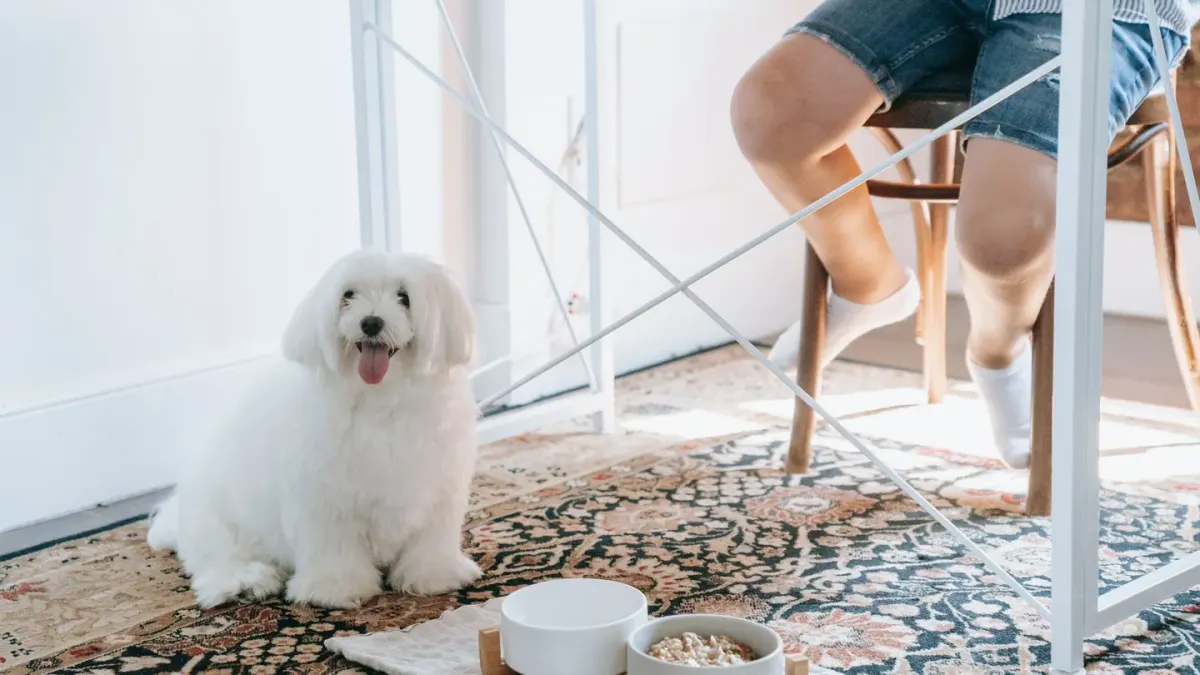
The best mat for a messy dog feeding station combines a raised lip, non-slip grip, and a wipeable surface — and honestly, most of the frustration owners feel about mealtime mess comes down to picking a mat that’s missing one of those three things.
If you’ve ever mopped up a puddle of water three feet from the bowl, or found kibble wedged under the fridge, you already know the problem isn’t your dog’s manners. Some dogs just eat and drink with more enthusiasm than precision, and a feeding station built for a tidy eater won’t hold up under a dog who paws at the bowl or drinks like it’s a race. This guide walks through what actually matters when you’re shopping for one, without pushing you toward any particular product.
Mat vs. Tray: What’s Actually Different
These two terms get used interchangeably, but they solve different problems. A mat is essentially a flat surface — it gives the bowl somewhere stable to sit and it catches drips, but a flat mat can’t stop a determined splash or a bowl that gets flipped. A tray adds a raised, lipped edge around the whole perimeter, so water and food that would normally skid onto the floor get physically contained instead.
For a mild dripper, a mat is genuinely enough. For a dog who noses the bowl across the floor, digs at kibble, or drinks with real gusto, the lip on a tray is doing work a flat mat simply can’t. It’s worth being honest with yourself about which category your dog falls into before you buy.
Materials That Hold Up
Three materials dominate this category, and each has a real trade-off.
Silicone is flexible, doesn’t crack over time, and wipes clean in seconds. It’s become the default choice for a reason. Rubber is heavier and grips the floor a bit more aggressively than silicone does, which matters if your dog tends to shove the whole setup around while eating. Fabric or microfiber mats feel nicer underfoot and are fully machine-washable, but they absorb moisture rather than repelling it, so a heavy splasher will need that mat laundered more often than a silicone owner needs to wipe theirs down.
None of these is objectively ‘best’ — the right pick depends on how messy your particular dog actually is and how much maintenance you’re willing to do. A light drinker does fine on fabric. A dog who treats mealtime like a contact sport is better served by silicone or rubber.
Sizing and the Raised-Lip Question
A common mistake is buying a mat sized to match the bowl almost exactly. That looks tidy in photos, but it defeats the purpose — kibble that bounces or water that splashes just lands past the edge of the mat and onto the floor anyway. Size the mat generously larger than the bowl’s footprint on all sides, not just snug around it.
The raised lip matters more than most buyers expect going in. It’s the single feature most responsible for containing a genuinely messy eater, because it turns the mat from something that only softens spills into something that actually holds them.
Traction and Where You Put It
A mat’s own non-slip backing only helps if the floor underneath cooperates. Some materials that grip nicely on carpet or textured tile slide more than you’d expect on polished hardwood or smooth vinyl — worth testing in the actual spot before you commit to it.
Placement matters too. Traction and footing around a dog’s regular resting and eating spots genuinely affect comfort and confidence, and that’s especially true for a dog who’s already less steady on their feet, according to Walkabout Canine Consulting, a canine conditioning consultancy that writes on how slippery flooring affects dogs. A low-traffic corner, away from a busy hallway, also tends to calm a dog down at mealtime — a dog who isn’t startled or rushed while eating is usually a less messy eater, too.
Cleaning and Long-Term Care
Daily upkeep is simple for most of these materials: a quick wipe or a rinse under the tap after each meal keeps food residue and bacteria from building up in the first place, rather than letting it accumulate for a weekly deep clean. Silicone and rubber can typically handle a full hose-down or a dunk in soapy water without any damage. Fabric needs an actual wash cycle occasionally, not just a wipe, since damp fibers can start to smell if they’re left to air-dry between full washes.
Whatever you land on, that maintenance habit matters more than the specific product. A great tray that never gets rinsed out will smell and attract pests just as fast as no tray at all.
A feeding station is a small piece of daily routine, but it’s one you’ll interact with twice a day for years. Choose the mat or tray around your actual dog’s habits — how much they splash, how hard they push the bowl around, and what floor it’s sitting on — and the mess mostly takes care of itself.
Frequently asked questions
Should I get a mat or a tray for a messy eater?
A flat mat is fine for a dog who just drips water or nudges a few pieces of kibble past the bowl. A tray with raised, lipped edges does more work for a dog who tips the bowl, digs at it, or sends food skidding — the lip physically contains the mess instead of just softening the landing.
What material is easiest to keep clean day to day?
Food-grade silicone and solid rubber wipe clean quickly and don't absorb odor the way fabric can. Fabric or microfiber mats are comfortable underfoot and machine-washable but need more frequent laundering if your dog is a heavy splasher.
Does the mat need to be dishwasher safe?
It's a nice-to-have, not a requirement. Most silicone and rubber mats hold up fine to a hose-down or a sink rinse with warm, soapy water. Dishwasher-safe simply saves you a step if you already run one after meals.
Where should the feeding station go?
Pick a spot with a stable, non-slip floor underneath the mat itself — tile or hardwood can let a mat slide if the mat's own grip isn't strong. A low-traffic corner away from a busy walkway also cuts down on the dog rushing or lunging at the bowl, which tends to make the mess worse.
Sources
- Slippery Floors & Dogs — Why Traction Matters for Comfort, Confidence & Long-Term Health — Walkabout Canine Consulting